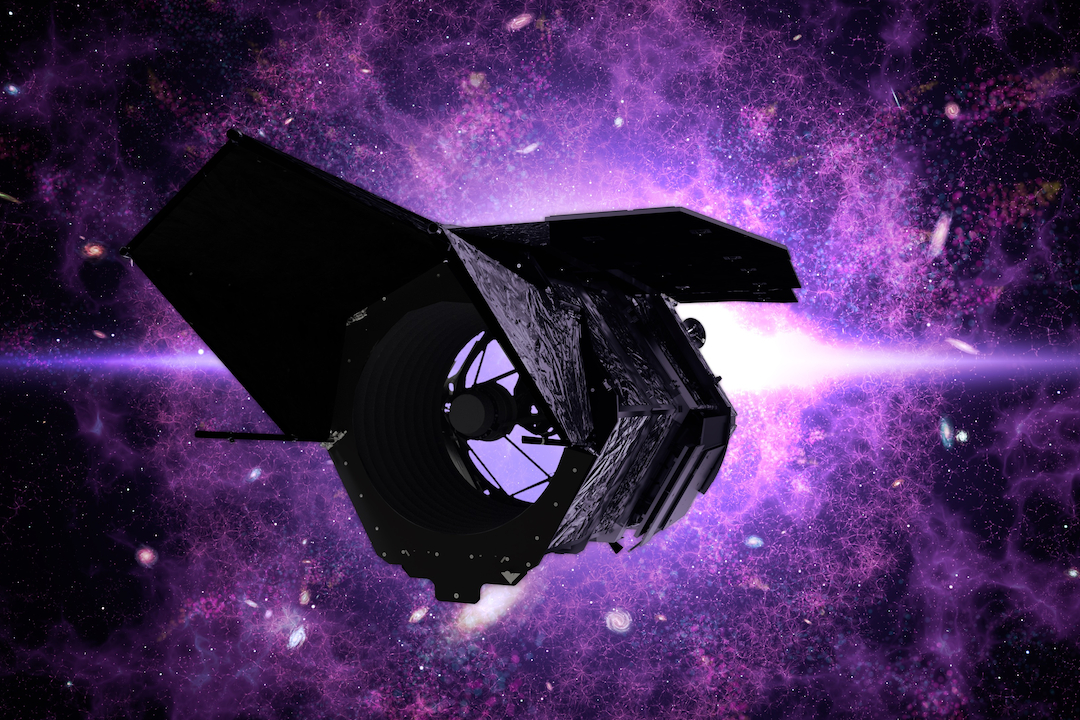
BAE Systems (LON: BA) announced in a press release on August 30 that NASA’s Nancy Grace Roman Space Telescope successfully launched from Kennedy Space Center, carrying an instrument structure the company designed, built, and tested. BAE Systems developed the Opto-Mechanical Assembly for Roman’s Wide Field Instrument (WFI), the telescope’s primary scientific instrument, providing the stable structure and thermal environment the instrument needs to meet its performance requirements. That assembly includes the optical bench, thermal control system, precision mechanisms, optics, and electronics that hold everything in place and keep it working at the extreme temperature stability space telescopes require, since even small temperature fluctuations can distort sensitive optical components enough to degrade the quality of what the instrument observes. BAE Systems also provided integration services and testing for the assembly before it was delivered for the broader spacecraft build.
Why This Instrument Is a Big Deal
According to the release, Roman’s Wide Field Instrument offers a field of view at least 100 times greater than the Hubble Space Telescope, letting scientists survey the sky up to 1,000 times faster. Field of view refers to how much sky a telescope captures in a single image; a narrower field of view, like Hubble’s, means researchers typically point the telescope at one small patch of sky at a time, while a much wider field lets Roman capture large swaths of the sky in each exposure. That difference matters less for looking at any single object in fine detail, which Hubble and the James Webb Space Telescope remain better suited for, and matters much more for large-scale survey science: studying billions of galaxies, stars, and other objects across wide areas of sky to understand broad patterns in how they form and change over time, work that would take an instrument with a narrower field of view impractically long to complete. A survey that might take Hubble years to complete across a comparable area of sky could, in principle, take Roman a small fraction of that time, freeing up telescope time that would otherwise be spent simply pointing and re-pointing at one patch of sky after another.
BAE Systems’ Track Record on NASA’s Flagship Telescopes
BAE Systems describes itself as having provided significant support for every one of NASA’s astrophysics flagship missions, from the Hubble Space Telescope through the James Webb Space Telescope and now Roman, framing these missions as building on shared technologies developed across that history. That continuity claim comes from BAE Systems itself; this article did not independently verify the specific scope of the company’s role on each prior mission, though it’s public knowledge that flagship space telescope programs typically involve dozens of contractors across optics, structures, electronics, and software, so “significant support” on a program of this scale doesn’t necessarily mean BAE built the majority of any given instrument, and the release itself doesn’t quantify BAE’s share of the work on Hubble or Webb specifically.
What Comes After Roman
The release also connects this launch to NASA’s next planned astrophysics flagship concept, the Habitable Worlds Observatory (HWO), which is still in early-stage development and would be built to directly image Earth-like planets orbiting other stars and search them for signs of life, according to the release. BAE Systems says its Ultra-Stable Large Telescope Research and Analysis (ULTRA) studies are developing a mirror actuation system capable of picometer-scale precision, a picometer being one trillionth of a meter, intended to give a future telescope the extreme optical stability that directly imaging a small, faint planet next to a much brighter star would require. That level of precision matters because a star is enormously brighter than any planet orbiting it, so isolating a planet’s faint light means the telescope’s own optics have to hold almost perfectly still, any tiny vibration or thermal shift can wash out the very signal the instrument is trying to capture. Because HWO remains an early-stage concept rather than a funded, scheduled mission, this work should be read as exploratory research toward a future program, not evidence of a confirmed contract or mission timeline.
What a Launch Actually Confirms, and What It Doesn’t
A successful launch means Roman reached orbit intact, but it isn’t the same as the telescope being ready for science. Space telescopes of this kind typically go through weeks or months of deployment, alignment, and instrument checkout after launch before routine science observations begin, a process during which problems can still surface even after a clean launch, as has happened with prior space telescope missions in the past. The release doesn’t specify Roman’s expected commissioning timeline or when its science mission is expected to formally begin, and it doesn’t disclose a dollar figure for BAE Systems’ specific contract value on this program. For a company like BAE Systems, a milestone like this matters less as a single event and more as one data point in a long-running relationship with NASA’s science programs, one the company will presumably continue to reference as Roman moves through commissioning and into its planned survey operations over the coming years.
Sources
NASA’s Roman Space Telescope Launches With BAE Systems-Built Scientific Instruments, PRNewswire, August 30, 2026.
Editorial Disclosure
This article is based on a press release issued by BAE Systems, Inc. on August 30, 2026, distributed via PRNewswire. Securities discussed: BAE Systems (LON: BA), listed on the London Stock Exchange. Next Gen Tech Stocks has not received compensation from BAE Systems, its management, investor relations representatives, or any third party for this coverage. No staff member or principal of Next Gen Tech Stocks holds a position in this security at the time of publication. This article covers a completed launch event; it does not disclose BAE Systems’ specific contract value for this program, Roman’s expected commissioning timeline, or independent verification of BAE Systems’ historical role across prior NASA flagship missions. Statements regarding the Habitable Worlds Observatory describe an early-stage mission concept, not a confirmed, funded program, and should be read as forward-looking. References to this company are for market context and analytical purposes only and do not constitute an investment recommendation. All securities carry investment risk including possible loss of capital. Coverage on Next Gen Tech Stocks is for informational and educational purposes only. See our full Disclaimer.