
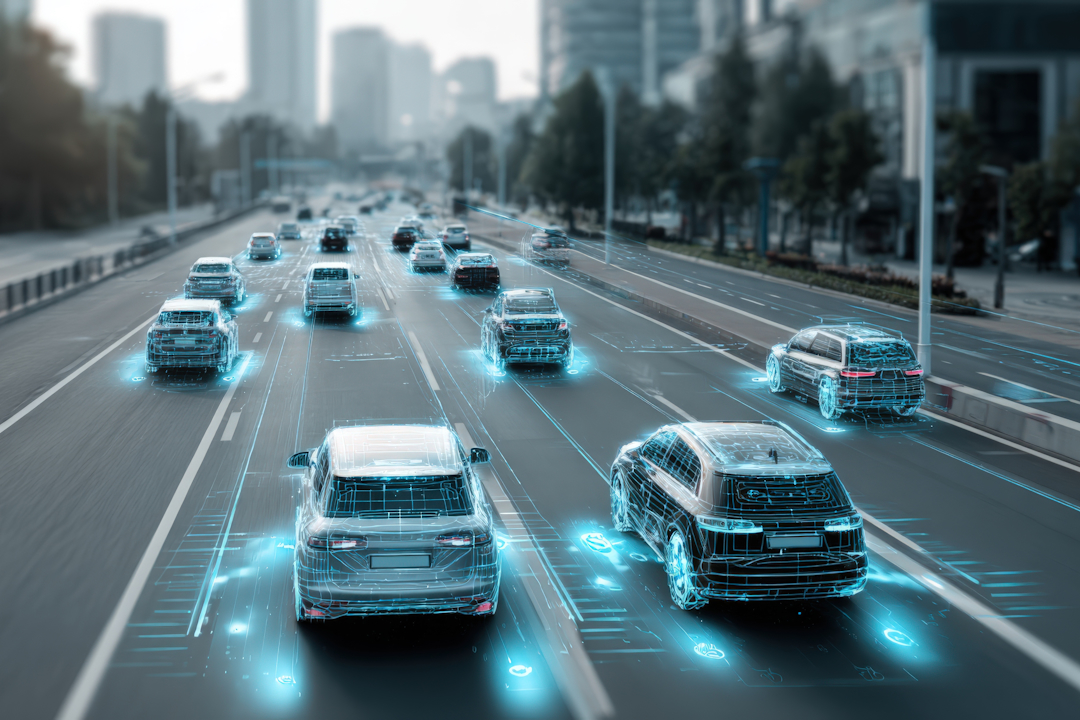
The autonomous vehicle story is the technology sector’s most instructive lesson in the gap between capability demonstration and reliable commercial deployment. Early projections of fully autonomous consumer vehicles by the early 2020s have been revised substantially as the difficulty of engineering systems that handle the full complexity of real-world driving has become clear. The sector is not failing — it is maturing, with commercial deployment happening in specific, constrained applications while the harder problem of general autonomy continues to be solved. Understanding this distinction is essential for evaluating the investment opportunity.
The Levels of Autonomy
Autonomous vehicle capability is described using a standardized framework of six levels, from Level 0 (no automation) to Level 5 (full automation in all conditions). Most vehicles on the road today include Level 1 or Level 2 features — driver assistance systems like adaptive cruise control and lane-keeping assist that handle specific sub-tasks but require constant driver supervision. Level 3 vehicles can handle driving in specific conditions without active driver monitoring but require the driver to be ready to intervene on request. Levels 4 and 5 represent vehicles that can drive without human intervention in specific domains or in all conditions respectively.
The gap between Level 2 and Level 4 is not a linear progression — it is a qualitative shift in what the system must be capable of. A Level 2 system can fail gracefully by alerting the driver to take over. A Level 4 system must handle any situation within its operational design domain without human intervention, because there is no human available to take over. Engineering and validating this capability across the enormous range of edge cases that real-world driving presents is the central challenge that has made the development timelines longer than early projections suggested.
The concept of operational design domain — the specific conditions and environments within which a Level 4 system is certified to operate — is the practical mechanism by which autonomous vehicles are being deployed commercially. Rather than solving the full general problem of driving in all conditions, companies are solving the specific, bounded problem of driving in a defined geographic area, weather range, and speed limit. This bounded approach has enabled the first commercial robotaxi deployments and is the model that autonomous trucking companies are following with geofenced highway routes.
Commercial Deployments: Where It Is Actually Working
Robotaxi services operating in specific cities with Level 4 autonomy are the most mature commercial manifestation of autonomous vehicle technology. These services demonstrate that autonomous vehicle technology can provide safe, reliable transportation in real-world conditions, but they also illustrate the current limitations: operation is confined to specific geographic zones, weather conditions, and time periods where the system has been thoroughly validated.
Autonomous trucking for highway freight is advancing on a parallel track with a compelling commercial logic. Long-haul highway driving is substantially simpler than urban driving — limited access roads with predictable traffic patterns, clear lane markings, and no pedestrians or cyclists. The operational design domain for highway autonomous trucking is more tractable than urban robotaxi, and the commercial incentives are large: driver shortage, cost reduction, and the ability to operate vehicles continuously without mandatory rest periods.
Mining and port automation represent closed-loop applications of autonomous vehicle technology that have achieved mature commercial deployment. Mining haul trucks operating on dedicated routes in open-pit mines have been operating autonomously for years, accumulating the kind of operational track record and data that public road vehicles are still building. Port automation — autonomous straddle carriers, yard tractors, and ship-to-shore equipment — is similarly mature, demonstrating what Level 4 autonomy looks like when the operational design domain can be tightly controlled.
The Sensor and Software Ecosystem
The technology stack for autonomous vehicles spans sensing, perception, prediction, planning, and control. Cameras, lidar, and radar each provide complementary views of the vehicle’s environment: cameras provide rich visual information, lidar provides precise three-dimensional point clouds, and radar provides reliable range information in adverse weather conditions. The sensor fusion challenge — combining these data sources into a coherent, real-time world model — is a computationally intensive task that requires specialized hardware and software.
The perception software layer uses machine learning systems trained on vast datasets of real-world driving data to identify objects, classify them, and track their movement over time. The quality and diversity of training data is a critical competitive differentiator: a system trained on millions of miles of diverse driving data will have seen more of the edge cases that matter for safety than one trained on a smaller dataset. This data advantage compounds over time as deployed fleets generate new training examples continuously.
HD mapping — the detailed three-dimensional maps of road environments that many autonomous vehicle systems use to supplement sensor data — is another competitive dimension of the technology stack. Companies that have mapped large geographic areas with the precision required for autonomous navigation have built an asset that is expensive and time-consuming to replicate. The relevance of HD maps versus camera-only approaches is a live technical debate in the industry, with significant implications for which companies’ competitive positions are most durable.
Investing in Autonomous Vehicles
Autonomous vehicle investment spans multiple layers of the technology stack. Vehicle manufacturers pursuing autonomy as a feature of their product are incumbent industrial companies for which autonomy is one of many competitive dimensions. Dedicated autonomy developers — companies whose primary product is an autonomous driving system or robotaxi service — are technology businesses valued on software and data asset logic. Sensor companies, chip designers, and mapping companies provide the technology inputs that the system integrators depend on.
The capital requirements of autonomous vehicle development are substantial and ongoing. Building and operating test fleets, generating training data at scale, employing the engineering teams required to develop and validate the software stack, and eventually scaling commercial operations all require significant capital over timelines measured in years to decades. Assessing the capital resources and burn rate of autonomous vehicle companies relative to their development milestones and commercialization timeline is an essential component of the investment analysis.
The regulatory environment for autonomous vehicles varies significantly by jurisdiction and is evolving as regulators develop frameworks appropriate for the new technology. Companies operating in jurisdictions with clear, supportive regulatory frameworks are better positioned to accumulate commercial operating experience and generate revenue than those waiting for regulatory certainty in less developed markets.
Conclusion
Autonomous vehicles are not a failed technology promise — they are a technology in the process of earning its commercial credentials in bounded applications while the full general problem continues to be solved. The commercial progress in robotaxi services, highway trucking, and industrial applications is real and growing. For investors, the key is aligning expectations with the actual pace of technology development and commercial scaling, rather than with the more optimistic projections that have periodically reset the sector’s valuation.
Key Takeaways
- Autonomy levels 4 and 5 require handling any situation without human intervention — a qualitative leap from driver-assistance systems.
- Commercial deployment is succeeding in bounded operational design domains: robotaxi geofences, highway trucking, and closed industrial sites.
- Training data volume and diversity is the central competitive differentiator in autonomous vehicle software development.
- Capital requirements are substantial and ongoing; burn rate relative to commercialization milestones is a critical investment risk factor.
Editorial Disclosure
This article is produced by NextGenTechStocks.com for informational and educational purposes only. NextGenTechStocks.com has not received any compensation from any company, management team, investor relations representative, or any third party in connection with the publication of this article. No staff member or principal of NextGenTechStocks.com holds a position in any security mentioned in this article at the time of publication. The information presented is based on publicly available sources and is intended to provide general market education only. Investing in technology stocks carries significant risk, including the potential loss of capital. Readers are encouraged to conduct their own due diligence and consult a qualified financial advisor before making any investment decisions. For more information, please see our full Disclaimer at NextGenTechStocks.com.