Agriculture feeds a growing global population using a shrinking amount of arable land per capita, under increasingly unpredictable climate conditions, and with a shrinking rural workforce in many developed economies. Technology is responding on multiple fronts: precision agriculture that optimizes every input on conventional farmland, and vertical farming that removes crop production from the constraints of weather and soil entirely. Both represent genuine engineering responses to structural pressures on the global food system, with distinct investment characteristics and maturity levels worth understanding separately.
Precision Agriculture: Optimizing the Existing Farm
Precision agriculture applies sensing, data analytics, and automated equipment control to optimize the application of water, fertilizer, and pesticides at a resolution far finer than traditional uniform field application, matching input application to the specific conditions of each small section of a field rather than treating an entire field as a uniform unit. This precision reduces input costs and environmental impact while, in many cases, improving yield by ensuring each part of a field receives the specific inputs its soil and growing conditions require.
Satellite and drone-based crop monitoring, connecting directly to the earth observation theme discussed elsewhere in this publication, provides the data foundation for precision agriculture by identifying variation in crop health, water stress, and pest pressure across a field well before these issues would be visible through routine ground-level inspection. Machine learning models trained on this imagery data, combined with soil sensor data and historical yield records, generate the field-specific recommendations that precision agriculture systems translate into automated equipment control instructions.
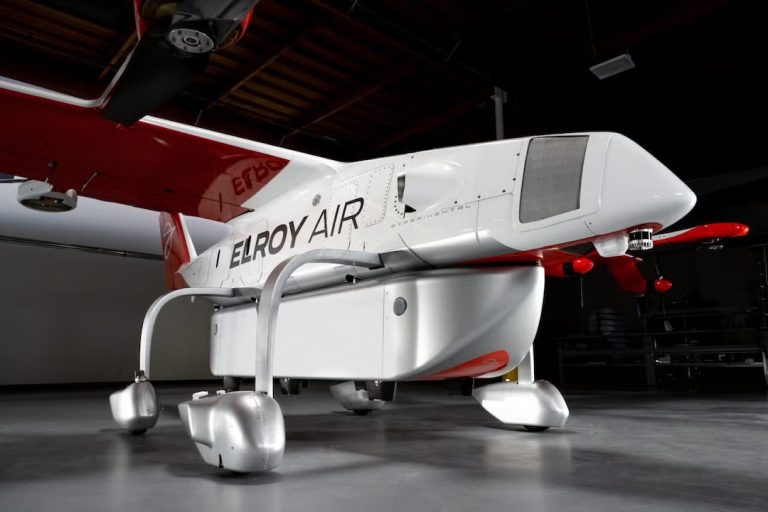
Autonomous and semi-autonomous farm equipment, extending the industrial robotics themes discussed elsewhere in this publication into agricultural applications, is addressing the persistent labor shortage that affects agriculture in many developed economies while enabling the continuous, round-the-clock field operations that precision timing requirements increasingly demand. Autonomous tractors, precision planting equipment, and robotic harvesting systems for specific crops represent a growing commercial category building on the broader autonomous systems technology discussed throughout this publication.
Vertical Farming: Growing Food Without Soil or Weather
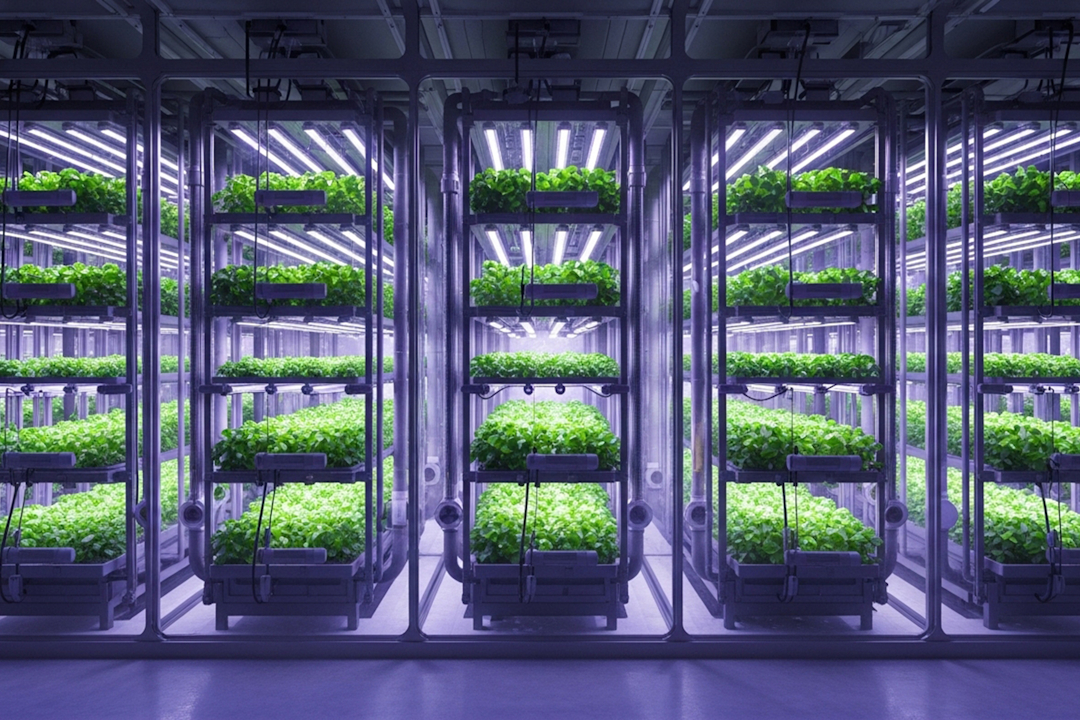
Vertical farming grows crops in stacked, climate-controlled indoor environments using hydroponic, aeroponic, or aquaponic growing systems rather than soil, with artificial lighting replacing natural sunlight. This approach eliminates the weather variability, seasonal limitations, and land constraints of conventional agriculture, enabling consistent, predictable production regardless of external climate conditions and allowing production facilities to be located close to urban consumption centers, reducing transportation distance and the associated cost and freshness degradation of long-distance produce shipping.
The economics of vertical farming remain heavily dependent on energy costs, given the substantial electricity required for artificial lighting and climate control systems that replace the free inputs of sunlight and natural weather that conventional agriculture relies on. This energy intensity has concentrated vertical farming’s commercial viability in high-value, fast-growing crops — leafy greens and herbs in particular — where the premium pricing these products command and the rapid growing cycles that maximize facility utilization can justify the higher energy and capital costs relative to conventional field agriculture.
LED lighting efficiency improvements have been a critical enabling factor for vertical farming economics, following a cost and efficiency trajectory similar to broader LED lighting technology improvements, directly reducing the largest controllable operating cost that vertical farming operations face. Continued improvement in lighting efficiency, combined with the falling renewable electricity costs discussed elsewhere in this publication, represents the primary pathway for vertical farming to expand its economically viable crop range beyond the current concentration in high-value leafy greens.
Alternative Growing Systems and Controlled Environment Agriculture
Greenhouse agriculture, a less capital-intensive and less energy-intensive alternative to fully enclosed vertical farming, uses natural sunlight supplemented by climate control systems to extend growing seasons and improve yield consistency relative to fully outdoor field agriculture, while avoiding the substantial artificial lighting energy costs that constrain vertical farming’s economically viable crop range. Advanced greenhouse operations, incorporating automated climate control, supplemental lighting, and precision nutrient delivery systems, represent a middle ground between conventional field agriculture and fully enclosed vertical farming.
Genetic and breeding technology, applying the biotechnology tools discussed elsewhere in this publication to crop development, is producing plant varieties specifically optimized for controlled environment agriculture conditions, including compact growth habits suited to vertical stacking and accelerated growing cycles that improve facility throughput. This crop breeding work represents an important complement to the growing system and lighting technology improvements driving controlled environment agriculture economics.
The integration of AI-driven growing optimization, applying machine learning to continuously adjust lighting, nutrient delivery, and climate parameters based on real-time plant health monitoring, represents an increasingly important software layer within controlled environment agriculture operations. This optimization capability can meaningfully improve yield and resource efficiency beyond what static, pre-programmed growing protocols achieve, representing a genuine technical differentiation opportunity for companies that have developed sophisticated growing optimization software.
Investing in AgTech
Precision agriculture technology companies, serving the vast existing base of conventional farmland, represent a larger addressable market with more established commercial economics than vertical farming, given that precision agriculture technology enhances existing, already profitable farming operations rather than requiring an entirely new capital-intensive production model to prove viable.
Vertical farming companies have experienced a challenging commercialization path, with several early, well-funded ventures encountering the difficulty of achieving profitable unit economics at the energy costs and crop range constraints the technology currently faces. This experience underscores the importance of evaluating vertical farming companies on demonstrated, sustainable unit economics for their specific crop portfolio and energy cost structure, rather than on total addressable market projections that assume an expansion into crop categories the current technology and economics may not yet support.
The broader agricultural technology supply chain — sensors, software platforms, LED lighting systems, and specialized growing equipment — offers a way to gain exposure to the structural growth of agricultural technology adoption without concentrated dependence on the commercial success of any specific vertical farming operator or precision agriculture platform, benefiting from technology adoption growth across the full range of controlled environment and precision agriculture approaches regardless of which specific model captures the largest market share.
Conclusion
Agricultural technology is responding to genuine structural pressures on the global food system through two distinct but complementary approaches: precision optimization of existing farmland and the more radical reinvention of production through controlled environment and vertical farming. Precision agriculture offers a larger, more immediately commercial opportunity by enhancing already-profitable conventional farming, while vertical farming’s more capital-intensive and energy-dependent model requires continued cost reduction to expand beyond its current niche in high-value leafy greens. For investors, understanding these distinct economics is essential to evaluating individual agricultural technology companies appropriately.
Key Takeaways
- Precision agriculture optimizes existing farmland through sensing and data analytics, offering a larger and more immediately commercial opportunity than vertical farming.
- Vertical farming’s economics remain heavily dependent on energy costs, concentrating commercial viability in high-value, fast-growing crops like leafy greens.
- LED lighting efficiency improvements are the critical enabling factor for expanding vertical farming’s economically viable crop range over time.
- Investors should scrutinize demonstrated unit economics for specific crop portfolios rather than broad total addressable market projections in vertical farming.
Editorial Disclosure
This article is produced by NextGenTechStocks.com for informational and educational purposes only. NextGenTechStocks.com has not received any compensation from any company, management team, investor relations representative, or any third party in connection with the publication of this article. No staff member or principal of NextGenTechStocks.com holds a position in any security mentioned in this article at the time of publication. The information presented is based on publicly available sources and is intended to provide general market education only. Investing in technology stocks carries significant risk, including the potential loss of capital. Readers are encouraged to conduct their own due diligence and consult a qualified financial advisor before making any investment decisions. For more information, please see our full Disclaimer at NextGenTechStocks.com.