
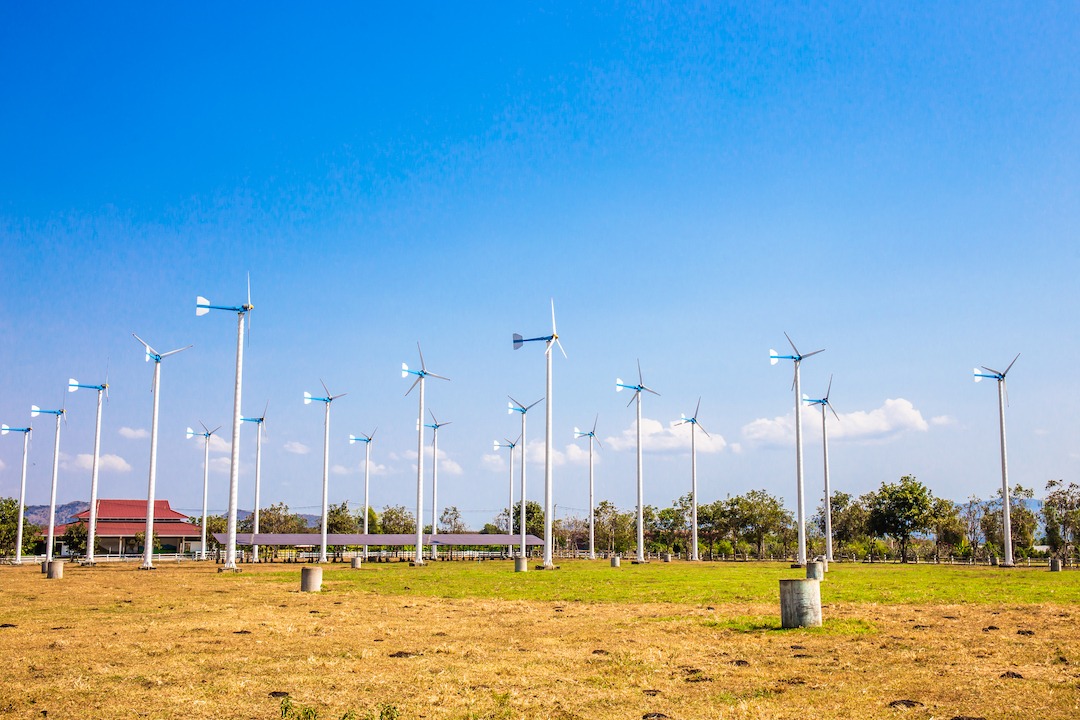
Skystream Energy wants its small wind turbine to earn its keep on calm days. The privately held Kansas City company said on October 14 that it is developing and testing a new blade with a larger swept area and a custom blend of wind tunnel-tested airfoils. One prototype is up, at a test site in Iowa. That is as far as it has gotten. Skystream has released no performance data, and it says final specifications, production timing and commercial availability will be announced only after testing is complete.
So read this as a progress report. Not a product launch.
What Skystream Says the Blade Should Do
The stated goal is more energy across light, moderate and turbulent winds, along with better control of output when the wind picks up. The company also expects the new design to cut turbine noise. All of these are framed in the release as intentions. None has been measured publicly.
There is a retrofit angle, too. Skystream said the blade may offer benefits at existing sites where wind conditions have historically limited production. “May” is the operative word there.
“Customers continue to look for ways to generate more of their own energy across a wider range of wind conditions,” said Ryan Loiacono, General Manager of Skystream Energy. He called the blade “an important step in that direction.”
Why Swept Area Matters
Swept area is the circle a turbine’s blades trace as they spin. A bigger circle lets more moving air pass through, which means more energy to catch. The physics here is well established: the power available to a turbine is directly proportional to its swept area, and that area grows with the square of the rotor’s diameter. Stretch the diameter by about 41% and the area doubles.
Wind speed matters even more. Available power rises with the cube of wind speed, so a breeze blowing at half the speed carries just one-eighth of the energy. That is the core headache for a turbine on a farm or behind a house. Much of the time, the wind simply is not carrying much, and a larger rotor is one of the few direct levers a designer can pull.
There is a catch. A bigger rotor also catches more force in a gust, which is why the release pairs the larger blade with improved control at higher wind speeds. Airfoils, the cross-sectional shapes of a blade that work much like an airplane wing, are where much of that balancing happens.
Who Worked on the Design
Two outside names appear in the announcement. Dr. Kyle K. Wetzel of Wetzel Wind Energy Services consulted on the blade. According to the release, he has designed blades for both large and small wind turbines.
Todd Hammen of Iowa Energy Alternatives collaborated with Wetzel on the design and is supporting the prototype testing at his company’s Iowa site. Hammen has worked with Skystream technology for more than 20 years, through dealership, contract and direct employment roles. That relationship is worth keeping in mind. The person hosting the test helped design the blade and has a long commercial history with the brand, so his upbeat comments about the turbine’s track record are not an independent assessment.
Independent validation would come from elsewhere. Skystream has said its current 3.7 Pro model is certified by UL and the Small Wind Certification Council. The release does not say whether the new blade will go through certification before it reaches customers.
An Old Name Under New Owners
Skystream has history. Southwest Windpower developed the original design, Xzeres owned it later, and the current ownership team acquired it in 2022. The brand relaunched in November 2025 with the updated Skystream 3.7 Pro. At the time, the company said the turbine had powered more than 8,500 installations worldwide and that the Pro version produces up to 2.4 kW, or roughly 5 to 11 MWh a year depending on site conditions. Those are company figures, not independent measurements.
The existing Skystream 3.7 stays on sale while the new blade is tested.
A Small Market With a Performance Problem
Small wind in the U.S. is a niche business. The Department of Energy’s Distributed Wind Market Report: 2024 Edition counted 1,994 small wind turbines, meaning units up through 100 kW, installed in 2023. Together they added 2.3 MW of capacity.
Output is the sticking point. The same report found the average net capacity factor for a sample of 100 small wind projects was 13% in 2023, with the best reaching 28%. Capacity factor compares what a turbine actually produces with what it would generate running at full power all year. A 13% average says most small turbines spend long stretches well below their rating, often in exactly the light winds Skystream is now targeting.
Retrofits are a real slice of this market. DOE’s 2022 edition reported that small wind retrofits made up 42% of total installed small wind capacity in 2021. If the new blade can be fitted to existing Skystream units, that gives it a ready audience. The company has not confirmed compatibility.
What to Watch
The data. Skystream says it will share final performance specifications once testing wraps up. When it does, the useful numbers will be a certified power curve, estimated annual energy at low average wind speeds, measured noise levels, and whether the blade works on turbines already in the field. Until then, every gain described in this release is a target.
Skystream is privately held, so there is no stock tied directly to this news.
Sources
- Skystream Energy Advances New Blade Design to Increase Energy Production Across a Wider Range of Wind Conditions, PRNewswire, October 14, 2026.
- Skystream Energy Revives an Icon of Small Wind with a Modern Design and a Broader Vision for Distributed Power, PRNewswire, November 5, 2025.
- Distributed Wind Market Report: 2024 Edition, U.S. Department of Energy.
- Distributed Wind Market Report: 2024 Edition, Executive Summary, Pacific Northwest National Laboratory.
- Distributed Wind Market Report: 2022 Edition, U.S. Department of Energy, August 2022.
- Theoretical Power of Wind, Wind Energy, Kirkwood Community College open textbook.
Editorial Disclosure
This article is based on a press release issued by Skystream Energy on October 14, 2026, distributed via PRNewswire. Skystream Energy is a privately held company with no publicly traded securities. Next Gen Tech Stocks has not received compensation from Skystream Energy, its management, investor relations representatives, or any third party for this coverage. No staff member or principal of Next Gen Tech Stocks holds a financial interest in Skystream Energy at the time of publication. Statements regarding the new blade’s expected energy production, noise reduction, retrofit potential, final performance specifications, production timing, and commercial availability are forward-looking and involve risks and uncertainties; actual results may differ materially. Installation counts and output figures for the existing Skystream 3.7 Pro are company-reported and have not been independently verified. References to this company are for market context and analytical purposes only and do not constitute an investment recommendation.
Coverage on Next Gen Tech Stocks is for informational and educational purposes only and does not constitute professional financial advice. For further details on our publishing standards, advertising relationships, and risk disclaimers, please see our full Terms & Disclaimers Page