
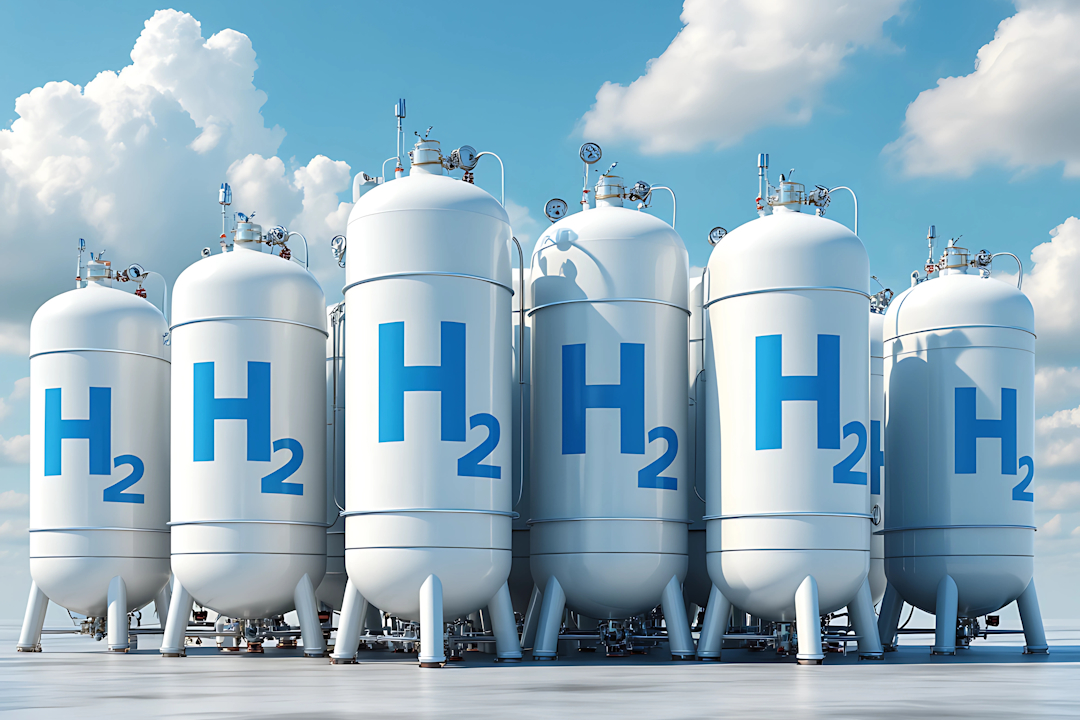
Electricity can decarbonize most of the economy, but not all of it. Steelmaking, long-haul shipping, aviation, and chemical manufacturing all depend on processes that cannot be easily electrified with current technology. Green hydrogen — produced by splitting water using renewable electricity — has emerged as the leading candidate to decarbonize these hard-to-abate sectors. The technology is real, but the economics remain the central question determining how large a role hydrogen will ultimately play in the energy transition.
What Makes Hydrogen Different From Electrification
Hydrogen is valuable in the energy transition because it can serve as both an energy carrier and a chemical feedstock, functions that electricity alone cannot fulfill. As an energy carrier, hydrogen can be stored for long periods and transported in ways that electricity cannot, making it a candidate for applications requiring energy density and storage duration that batteries cannot economically match. As a chemical feedstock, hydrogen is already a critical industrial input — used in ammonia production for fertilizer, in oil refining, and in a range of chemical manufacturing processes — independent of its potential role as an energy carrier.
The color coding of hydrogen production methods reflects their carbon intensity. Gray hydrogen, produced from natural gas through steam methane reforming without carbon capture, is the dominant production method today and carries a significant carbon footprint. Blue hydrogen uses the same natural gas process but captures and stores the resulting carbon emissions, reducing but not eliminating the carbon footprint. Green hydrogen, produced by electrolysis using renewable electricity to split water into hydrogen and oxygen, produces no direct carbon emissions and represents the pathway that most decarbonization strategies are ultimately targeting.
The fundamental challenge for green hydrogen is cost. Electrolysis is an energy-intensive process, and the cost of green hydrogen is driven primarily by the cost of the renewable electricity used to produce it and the capital cost of the electrolyzer equipment. Green hydrogen currently costs several times more than gray hydrogen in most markets, and closing this cost gap through falling renewable electricity prices and electrolyzer manufacturing scale is the central commercial challenge facing the industry.
Where Hydrogen Makes the Most Economic Sense
Steel production is responsible for a significant share of global industrial carbon emissions, driven by the use of coal-derived coke as both a fuel source and a chemical reducing agent in converting iron ore to metallic iron. Hydrogen can replace coke in this reducing role, producing water instead of carbon dioxide as a byproduct. Direct reduced iron processes using hydrogen have been demonstrated at industrial scale, and several steel producers in Europe have committed to hydrogen-based production for new and retrofitted facilities, representing one of the most concrete commercial applications of green hydrogen in heavy industry.
Ammonia production, primarily for agricultural fertilizer, is another application where hydrogen is already an essential input, making the transition to green hydrogen a matter of substituting the production method for an existing process rather than developing an entirely new value chain. Green ammonia also has a secondary application as a potential maritime shipping fuel, since ammonia is easier to store and transport than pure hydrogen and can be used directly in modified marine engines or fuel cells.
Long-duration energy storage represents a potential application for hydrogen distinct from its industrial uses. Hydrogen produced during periods of surplus renewable generation can be stored for extended periods and converted back to electricity when needed, addressing the seasonal and multi-day storage gap that battery technology struggles to fill economically. This application faces significant efficiency losses in the conversion process, which limits its competitiveness against alternative long-duration storage technologies for most applications, but remains a credible option for specific grid reliability requirements.
The Electrolyzer Manufacturing Race
The equipment that performs the electrolysis process — splitting water into hydrogen and oxygen using electricity — is a critical determinant of green hydrogen’s cost trajectory. Several electrolyzer technologies are competing for market position, each with different cost, efficiency, and durability characteristics. Alkaline electrolyzers represent mature, lower-cost technology with a long industrial track record. Proton exchange membrane electrolyzers offer faster response times better suited to variable renewable power input but at higher current cost. Solid oxide electrolyzers offer potentially higher efficiency, particularly when integrated with industrial processes that produce waste heat, but remain less commercially mature.
Manufacturing scale is expected to drive electrolyzer cost reduction in a pattern similar to the cost curves observed in solar panels and batteries. As cumulative electrolyzer production volume increases, manufacturing efficiencies, supply chain optimization, and technology improvements are expected to reduce costs substantially. Multiple countries have established electrolyzer manufacturing capacity targets as part of broader industrial policy supporting the domestic hydrogen economy, creating both demand certainty and competitive intensity in the manufacturing sector.
The companies best positioned in electrolyzer manufacturing are those combining manufacturing scale, technology performance, and the balance sheet strength to sustain investment through a period where demand is growing but has not yet reached the scale needed for full manufacturing cost optimization. This is a capital-intensive, competitive market where execution and scale matter as much as underlying technology performance.
Evaluating the Green Hydrogen Investment Case
Green hydrogen investment requires a clear-eyed assessment of which applications have credible near-term economics and which depend on cost reductions or policy support that may take longer to materialize than current enthusiasm suggests. Applications where hydrogen is already used today — ammonia production, oil refining — represent the most straightforward near-term market for green hydrogen substitution, requiring policy support or carbon pricing to close the cost gap rather than the development of entirely new markets.
Applications requiring new infrastructure and new end-use technology — hydrogen for passenger vehicles, widespread hydrogen heating — face a more difficult commercial path, competing against battery electric and heat pump alternatives that have achieved greater cost reduction and market traction in most applications. Investors should be appropriately skeptical of hydrogen applications competing directly against mature electrification alternatives in the same market segment.
Government policy remains a significant driver of green hydrogen economics in the current market phase. Production tax credits, carbon pricing mechanisms, and mandates for green hydrogen use in specific industrial processes are material factors in the near-term commercial viability of hydrogen projects. Understanding the policy environment in specific jurisdictions is an essential component of evaluating individual hydrogen project economics and the companies developing them.
Conclusion
Green hydrogen is not a universal decarbonization solution, but it is likely the best available option for a specific set of hard-to-abate industrial applications where direct electrification is not currently feasible. The path to commercial viability runs through electrolyzer cost reduction, renewable electricity cost declines, and continued policy support for the applications where hydrogen offers genuine advantages over competing decarbonization pathways. For investors, the discipline is focusing on the applications with the strongest underlying economic logic rather than the full scope of hydrogen’s theoretical potential.
Key Takeaways
- Green hydrogen serves applications that electrification cannot easily reach — heavy industry, shipping, and long-duration storage.
- Steel production and ammonia manufacturing represent the most commercially credible near-term applications for green hydrogen.
- Electrolyzer manufacturing cost reduction, driven by production scale, is the central determinant of green hydrogen’s competitiveness.
- Investors should favor hydrogen applications with structural advantages over electrification, rather than applications competing directly against mature battery alternatives.
Editorial Disclosure
This article is produced by NextGenTechStocks.com for informational and educational purposes only. NextGenTechStocks.com has not received any compensation from any company, management team, investor relations representative, or any third party in connection with the publication of this article. No staff member or principal of NextGenTechStocks.com holds a position in any security mentioned in this article at the time of publication. The information presented is based on publicly available sources and is intended to provide general market education only. Investing in technology stocks carries significant risk, including the potential loss of capital. Readers are encouraged to conduct their own due diligence and consult a qualified financial advisor before making any investment decisions. For more information, please see our full Disclaimer at NextGenTechStocks.com.