Georgia Power just switched on a battery big enough to help keep the lights on across Middle Georgia for hours at a stretch, and the timing is not a coincidence. The Robins Battery Facility, a 128-megawatt battery energy storage system near Warner Robins, reached commercial operation this month, the company said. Georgia Power has also told state regulators to expect roughly 8,500 megawatts of new electricity demand over the next six years, mostly tied to data centers. Against that backdrop, one battery plant looks small. But it is real, already built, and already running, which is more than can be said for most of what utilities announce. Battery storage like this has quietly become one of the more practical tools utilities have for handling that kind of growth, since it can be built in a couple of years rather than a decade.
How the Robins Facility Fits Together
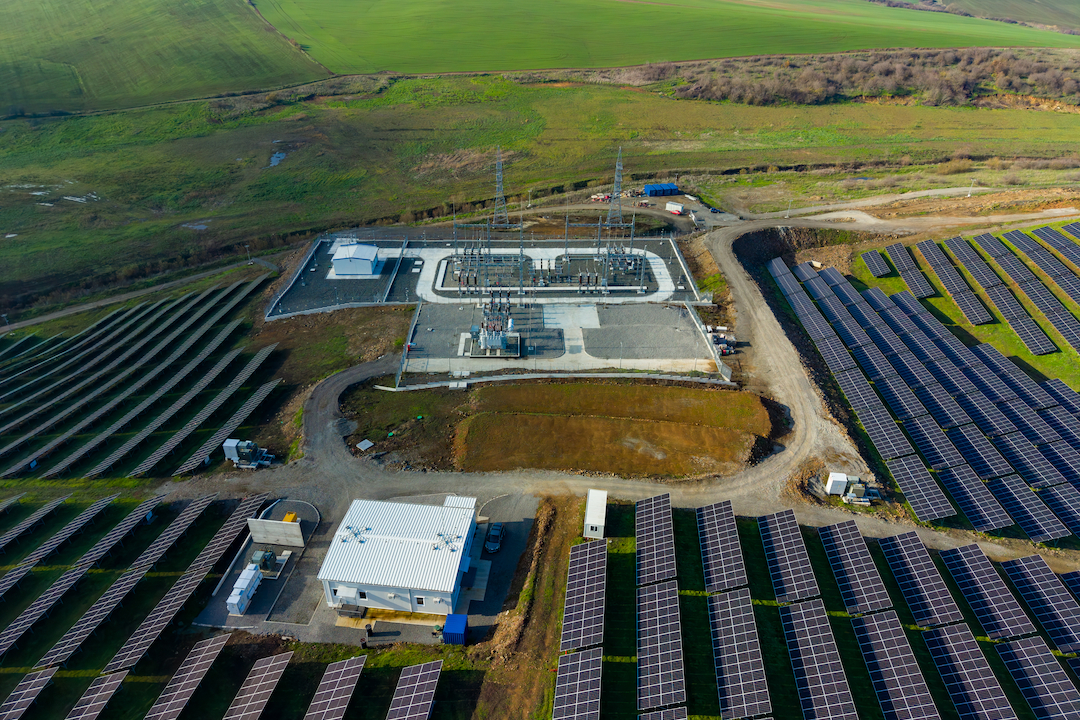
Georgia Power executives, Robins Air Force Base leadership, and a lineup of state and local officials gathered recently to mark the milestone. Company regional executive Bowen Shoemaker, Macon-Bibb County Mayor Lester Miller, several Georgia state legislators, and Robins AFB Col. Johari Hemphill were among those on hand, according to the release. The battery sits next to the existing Robins Solar Facility in Macon-Bibb County and can discharge stored power onto the grid for up to four hours before it needs to recharge.
The mechanics are straightforward. The battery captures solar power when the sun is out and demand is low, then feeds that stored energy back onto the grid later, on a cold winter morning, for instance, or during a summer afternoon peak. Pairing batteries with solar addresses one of solar power’s oldest limitations: the sun does not always shine when people need electricity the most. A four-hour discharge window is long enough to cover most evening demand spikes, when solar output has already tailed off but people are still running air conditioners, heaters or appliances at home. Burns & McDonnell served as the engineering, procurement and construction contractor on the project and delivered it on schedule, Georgia Power said.
“Seeing the Robins Battery Facility enter commercial operation is an important milestone,” said Rick Anderson, Georgia Power’s senior vice president and senior production officer, framing the project as evidence the company is “creating a more flexible and resilient grid” that can respond to demand spikes. That is the company’s own characterization of what pairing batteries with solar accomplishes, not an independently verified performance claim, though the underlying concept, storing solar power for later use, is well established.
Part of a Much Larger Buildout
Robins is one of four battery storage projects Georgia regulators approved in Georgia Power’s 2023 Integrated Resource Plan Update. Two of the other three are already finished, in Cherokee and Lowndes counties, adding up to 579.5 MW combined. A fourth, a 57.5 MW facility in Floyd County, is nearing completion, according to the company.
That is still just a fraction of what is in the pipeline. Georgia’s Public Service Commission has separately approved nine more battery storage sites spread across eight locations statewide, together adding more than 3,000 MW of additional storage capacity once built. Planned sites include locations at Plants Bowen, Hammond, McIntosh, Wansley and Yates, plus standalone facilities in Hall and McDuffie counties. Two more solar-plus-storage projects, a combined 350 MW, are planned for Laurens and Mitchell counties. None of that is operating yet. It is approved and queued up, which is a different thing than built.
Why Georgia Needs This Many Batteries
Metro Atlanta has become one of the busiest data center markets in the country, and it shows up in Georgia Power’s own numbers. The utility’s 2025 Integrated Resource Plan, approved by state regulators, projects approximately 8,500 MW of new electric load over the next six years, an increase of roughly 2,600 MW compared with the company’s 2023 forecast, driven largely by AI and data center growth.
That plan has drawn real pushback. Consumer and environmental groups have argued the projections lean on demand that may not fully show up, and that ratepayers could end up covering the cost of infrastructure built for customers who never materialize. Some critics have specifically pointed to Georgia Power’s decision to keep coal units running longer and add new gas capacity as evidence the utility is hedging toward fossil fuels even as it builds out storage and solar. Battery storage sidesteps part of that argument. Unlike a new gas plant built on spec for a data center that may or may not get built, batteries paired with existing solar and grid infrastructure are useful regardless of how the data center forecast plays out.
Who Actually Owns This
Georgia Power itself does not trade on any exchange. It is the largest electric subsidiary of Southern Company (NYSE: SO), and it serves about 2.8 million customers across all but four of Georgia’s 159 counties. The company describes its generation mix as a blend of nuclear, coal, natural gas, and renewables including solar, hydroelectric and wind, and it has said its rates run below the national average.
The Bottom Line
The Robins Battery Facility is a finished, working piece of a much larger plan, not a projection on a slide. Whether the rest of Georgia Power’s storage pipeline gets built on schedule, and whether the data center demand behind all of it shows up the way the company expects, is a longer story still being written. For now, Middle Georgia has a new battery, and it works.
Sources
Georgia Power’s Robins Battery Storage achieves commercial operation helping to ensure reliable energy in Georgia, PRNewswire, September 15, 2026.
Integrated Resource Plan, Georgia Power.
Georgia Power’s new IRP keeps coal plants online to serve data centers, Utility Dive, July 2025.
Editorial Disclosure
This article is based on a press release issued by Georgia Power on September 15, 2026, distributed via PRNewswire. Securities discussed: Southern Company (NYSE: SO), Georgia Power’s parent company; Georgia Power itself is not separately traded. Next Gen Tech Stocks has not received compensation from Georgia Power, Southern Company, their management, investor relations representatives, or any third party for this coverage. No staff member or principal of Next Gen Tech Stocks holds a position in this security at the time of publication. Statements regarding the timeline and scope of Georgia Power’s planned and pending battery storage projects are forward-looking and subject to change; actual construction schedules and final capacity may differ. References to this company are for market context and analytical purposes only and do not constitute an investment recommendation. All securities carry investment risk including possible loss of capital.
Coverage on Next Gen Tech Stocks is for informational and educational purposes only and does not constitute professional financial advice. For further details on our publishing standards, advertising relationships, and risk disclaimers, please see our full Terms & Disclaimers Page