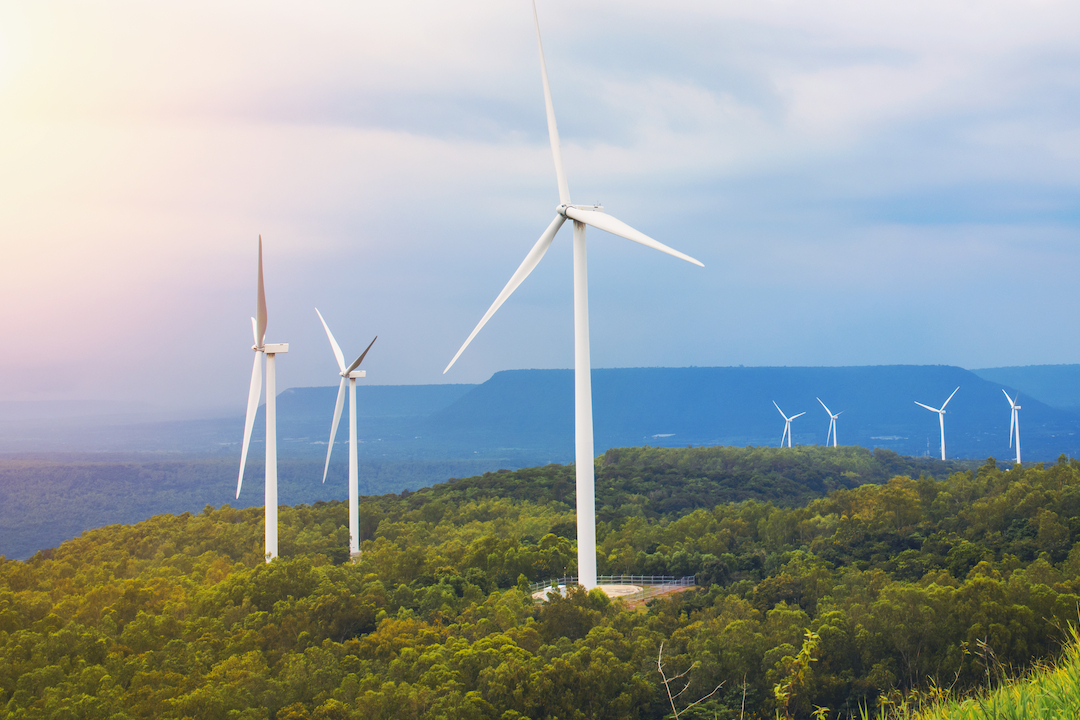
Wind turbine blades have a disposal problem. They are built from glass or carbon fiber locked inside hardened resin, and when a turbine retires, many blades have ended up in landfill.
On September 24, CRRC Corporation Limited (SSE: 601766; HKEX: 1766) said it has finished producing a 110-meter blade designed to come apart instead. It was built in Sheyang, in China’s Jiangsu Province. CRRC says the blade achieves a recovery rate above 95% for key raw materials. That number comes from the company alone. The release doesn’t say how it was measured, who measured it, or which materials count as “key,” and it cites no outside testing or certification.
The announcement went out via PRNewswire under a Hamburg dateline. That puts it in the same week as WindEnergy Hamburg, one of the wind industry’s largest trade fairs, running September 22 to 25.
Why Blades Are the Hard Part
Most of a wind turbine recycles without much trouble. Towers are steel. Nacelles, the housings that hold the generator, are mostly metal and electronics. Siemens Gamesa has put the recyclable share of a typical turbine at around 85%.
Blades are the holdout. They are composites: strong fibers set in a thermoset resin, a plastic that hardens permanently once it cures. Like a boiled egg, it can’t be turned back. Getting clean fiber out again is the hard part.
And the pile is growing. A peer-reviewed 2017 study from the University of Cambridge’s Institute for Manufacturing projected 43 million metric tons of blade waste worldwide by 2050, with China accounting for about 40%.
CRRC’s release offers nearer-term numbers. It cites unnamed “industry estimates” that more than 30,000 turbines in China, representing 44.73 GW of capacity, will have been retired by 2030, generating 947,900 metric tons of wind-related solid waste. That’s a broader category than blades alone. The release also says new Chinese wind installations are expected to exceed 470 GW “in the years ahead,” with no source and no firm time frame.
How CRRC Says Its Blade Comes Apart
The key ingredient is what CRRC calls a debondable infusion resin. Infusion is the manufacturing step where liquid resin is drawn through dry layers of fiber inside a mold before it hardens. CRRC’s resin is built on reversible chemical bonds. With the right chemical treatment, the company says, those bonds let go, and the resin separates from the reinforcing fibers so both can be recovered.
Think of it as glue with an off switch.
CRRC says the blade fully meets requirements for strength, stiffness and fatigue life. Fatigue matters most here, since a blade flexes constantly over a service life of two decades or more. The release offers no test data. It doesn’t say the blade has been certified, installed on a turbine, or sold. It names no customer and no order. What it announces is that production is complete.
Recovered resin and fiber could be reused in wind equipment, car manufacturing and infrastructure, according to the company. It doesn’t say what those materials would be worth or who has agreed to buy them.
Siemens Gamesa Got There First
Recyclable blades aren’t new. Siemens Gamesa launched its RecyclableBlade in September 2021 and says the first commercial units went onto RWE’s Kaskasi offshore wind farm in the German North Sea in 2022. Its process soaks a retired blade in a heated, mildly acidic solution to separate the resin from the glass fiber, wood and metal.
Long recyclable blades aren’t new either. In 2023, RWE agreed to put 132 of Siemens Gamesa’s 108-meter recyclable blades on its Sofia offshore project off the UK coast. RWE said at the time that was the maximum available, given limited market capacity for the specialty resin. Siemens Gamesa also lists a 115-meter version.
That resin bottleneck is worth watching. A recyclable blade scales only as fast as its chemistry supply, and CRRC says nothing about how much of its resin it can produce. Its potential edge is location. China is projected to hold the largest share of future blade waste.
Building the Other Half of the Loop
A recyclable blade only pays off if someone actually recycles it, 20-plus years from now. CRRC points to earlier moves on that side. In March 2025, it says, it developed China’s first TMT82 recyclable thermoset-resin blade. A month later it launched what it describes as China’s first mobile processing system for retired blades, a “smart mobile recycling factory” that can be set up near wind farms instead of trucking giant blades to fixed plants.
The company says that system’s processing capacity exceeds applicable national standards. It doesn’t name the standards or give throughput figures. Both “China’s first” claims are CRRC’s own and were not independently verified for this article.
What It Means for Investors
CRRC is primarily a rail equipment manufacturer. Wind turbines appear in its business profile alongside trucks, buses, construction machinery and much else. The release gives no revenue, order or delivery figures tied to the blade, so its financial impact can’t be judged from this announcement.
CRRC says the blade can help customers meet sustainability reporting obligations, including the EU’s Corporate Sustainability Reporting Directive (CSRD), and strengthens its position as it takes offshore wind equipment into international markets. Both are forward-looking claims. CSRD is a disclosure rule. It requires companies to report on sustainability; it doesn’t mandate recyclable blades.
CRRC’s shares trade in Shanghai and Hong Kong, not on a US exchange.
The blade targets a real problem. Until CRRC shares independent test data, a paying customer and a working recycling chain, the 95% figure remains a company claim.
Sources
- CRRC Completes Production of 110-Meter Recyclable Wind Turbine Blade, Achieving Over 95% Recovery of Key Materials, PRNewswire, September 24, 2026.
- Wind Turbine Blade Waste in 2050 (Liu and Barlow, Waste Management, Vol. 62), University of Cambridge Repository, 2017.
- Revolutionary RecyclableBlades: Siemens Gamesa technology goes full-circle at RWE’s Kaskasi offshore wind power project, Siemens Gamesa, August 1, 2022.
- Commanding circularity: Siemens Gamesa announces RecyclableBlade for onshore wind power projects, Siemens Gamesa, September 2022.
- RWE’s Sofia offshore wind farm to use recyclable blades, RWE, March 9, 2023.
- CRRC Corporation Limited: Announcement in Relation to Convening of 2025 Annual Results Briefing (A share and H share stock codes), HKEXnews, April 2, 2026.
- WindEnergy Hamburg 2026 trade fair listing, JETRO J-messe database.
Editorial Disclosure
This article is based on a press release issued by CRRC Corporation Limited on September 24, 2026, distributed via PRNewswire. Securities discussed: CRRC Corporation Limited (SSE: 601766; HKEX: 1766). Next Gen Tech Stocks has not received compensation from CRRC, its management, investor relations representatives, or any third party for this coverage. No staff member or principal of Next Gen Tech Stocks holds a position in this security at the time of publication. The reported recovery rate of more than 95% for key raw materials is a company-reported figure that has not been independently verified. Statements regarding the blade’s performance, recyclability, commercial deployment, reuse of recovered materials, and CRRC’s international market position, as well as projections for wind installations and turbine retirements, are forward-looking and involve risks and uncertainties; actual results may differ materially. Securities listed in Shanghai and Hong Kong may carry currency, market-access, and regulatory considerations for US-based investors. References to this company are for market context and analytical purposes only and do not constitute an investment recommendation. All securities carry investment risk including possible loss of capital.
Coverage on Next Gen Tech Stocks is for informational and educational purposes only and does not constitute professional financial advice. For further details on our publishing standards, advertising relationships, and risk disclaimers, please see our full Terms & Disclaimers Page