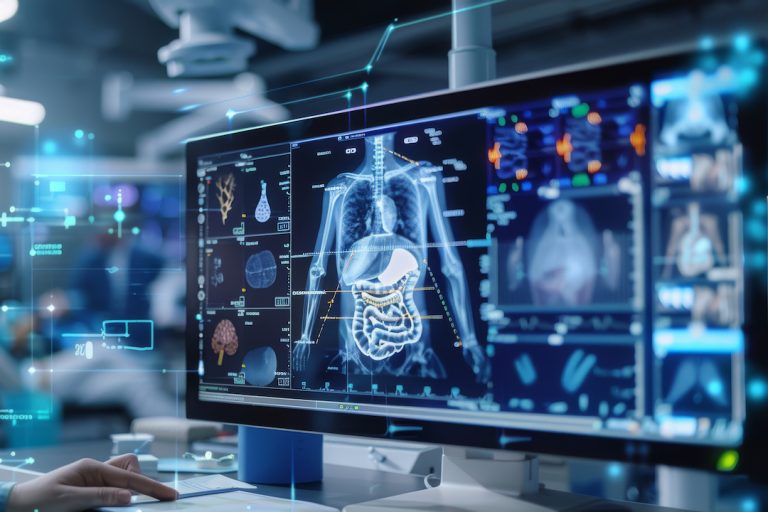

Long before generative AI captured public attention, computer vision was quietly solving one of artificial intelligence’s foundational challenges: teaching machines to interpret the visual world with something approaching human reliability. That capability now underpins autonomous vehicles, medical diagnostics, industrial quality control, and satellite imagery analysis discussed throughout this publication. Computer vision is less visible to consumers than chatbots and image generators, but its economic footprint across industrial and scientific applications may prove to be just as significant.
From Pixels to Understanding
A digital image is, at its most basic level, a grid of numerical values representing color and brightness at each pixel location. Computer vision is the discipline of extracting meaningful information from this numerical grid — identifying objects, measuring distances, detecting defects, or tracking movement — a task that is intuitive for the human visual system but was extraordinarily difficult to encode into explicit software rules using the conventional programming approaches that dominated computing before deep learning matured.
Convolutional neural networks, a specialized deep learning architecture designed to recognize spatial patterns in image data, produced the breakthrough that transformed computer vision from a research curiosity into a commercially reliable technology. These networks learn to recognize increasingly complex visual features in successive layers, starting with simple edges and textures in early layers and building toward recognition of complete objects and scenes in deeper layers, mirroring in a rough functional sense the hierarchical processing that occurs in biological visual systems.
The accuracy improvements computer vision has achieved over the past decade have been dramatic. Object recognition systems that once struggled with basic classification tasks now match or exceed human accuracy on many benchmark visual recognition challenges, and the technology has extended well beyond simple classification into more sophisticated tasks including precise object localization, action recognition in video, and the three-dimensional scene understanding that autonomous vehicles and robotics applications require.
Industrial Quality Control and Inspection
Manufacturing quality inspection represents one of the most economically significant commercial applications of computer vision. Automated visual inspection systems can examine products at production line speeds, identifying defects with a consistency that human inspectors, subject to fatigue and attention lapses over long shifts, cannot reliably match. The economic case is direct: catching defects earlier in the production process reduces the cost of downstream rework, scrap, and warranty claims that defective products passing undetected through inspection would generate.
The technical challenge of industrial inspection differs meaningfully from general purpose visual recognition, since manufacturing defects are often subtle, rare, and highly specific to a particular product and process. This has driven demand for computer vision systems that can be trained effectively on limited defect examples, using techniques including synthetic data generation and transfer learning from broader visual recognition models to compensate for the inherent scarcity of real-world defect images in most manufacturing environments.
Semiconductor manufacturing, discussed elsewhere in this publication as one of the most demanding manufacturing environments, has become a particularly sophisticated application area for computer vision inspection, given the need to detect defects at the microscopic scale that modern chip features require. The precision demands of semiconductor inspection have pushed computer vision technology development in ways that have subsequently benefited less demanding industrial inspection applications across other manufacturing sectors.
Vision Systems in Autonomous Machines
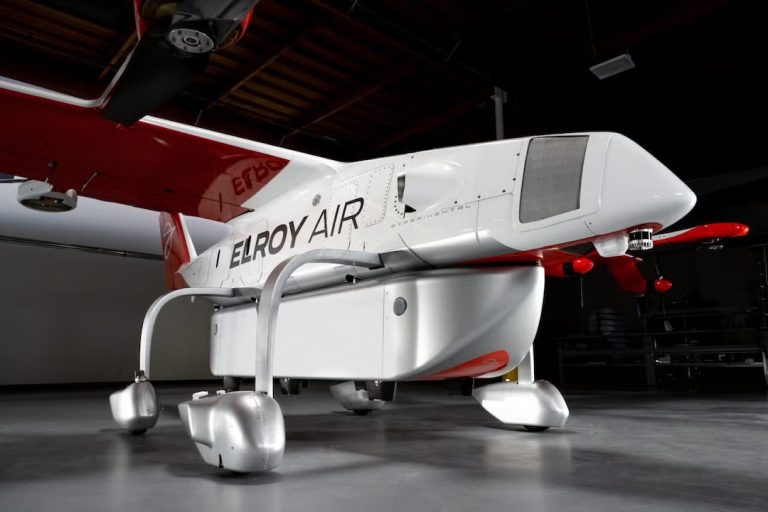
Every autonomous system discussed throughout this publication — self-driving vehicles, warehouse robots, agricultural equipment, surgical robots — depends on computer vision as a primary means of perceiving and navigating its physical environment. The reliability requirements for these safety-critical applications are substantially higher than for applications like photo organization or content moderation, where an occasional error carries limited consequence.
Three-dimensional scene understanding, combining computer vision with depth sensing technology including lidar, stereo cameras, and structured light sensors, has become increasingly important as autonomous systems have moved from simple object recognition toward the more complex spatial reasoning that navigation and manipulation tasks require. Understanding not just what objects are present in a scene but their precise three-dimensional position, orientation, and trajectory is essential for an autonomous system to plan safe and effective actions.
The integration of computer vision with other AI capabilities — language understanding, planning, and reasoning — is producing increasingly capable multimodal systems that can interpret visual scenes in the context of natural language instructions or broader task objectives. This integration is extending computer vision’s applicability from narrow, single-purpose recognition tasks toward the more flexible, general-purpose visual understanding that advanced robotics and autonomous systems increasingly require.
Investing in Computer Vision Technology
Computer vision technology companies span a spectrum from specialized hardware providers — camera and sensor manufacturers optimized for machine vision applications — to software and algorithm companies providing the models and platforms that process visual data, to fully integrated solution providers combining hardware, software, and domain expertise for specific industrial or commercial applications.
The defensibility of computer vision companies often rests on the depth and specificity of their training data for a given application domain, similar to the data advantages discussed for machine learning companies more broadly elsewhere in this publication. A computer vision company with years of accumulated defect imagery from a specific manufacturing process, or years of accumulated driving scenario data from a specific autonomous vehicle application, has built a data asset that is difficult for new entrants to replicate quickly.
The semiconductor and sensor companies providing the underlying hardware for computer vision applications — image sensors, specialized vision processing chips, and depth sensing hardware — represent a complementary investment angle, benefiting from the growth of computer vision deployment across industrial, automotive, and consumer applications regardless of which specific software and algorithm providers ultimately capture the most value in any given application category.
Conclusion
Computer vision has matured from a specialized research discipline into foundational infrastructure for a remarkably wide range of commercial applications, from factory floors to operating rooms to autonomous vehicles. Its relative invisibility to consumers, compared to more attention-grabbing generative AI applications, belies its substantial and growing economic footprint. For investors, computer vision offers exposure to AI value creation through channels that are often more immediately measurable and more defensible than the more speculative frontiers of the broader artificial intelligence landscape.
Key Takeaways
- Convolutional neural networks transformed computer vision from a research curiosity into a commercially reliable technology matching or exceeding human accuracy on many tasks.
- Industrial quality inspection represents one of computer vision’s most economically significant applications, with a direct and measurable cost-reduction case.
- Every autonomous system discussed in this publication depends on computer vision, often combined with depth sensing, for safety-critical spatial perception.
- Defensibility in computer vision companies often rests on accumulated, application-specific training data that is difficult for new entrants to replicate.
Editorial Disclosure
This article is produced by NextGenTechStocks.com for informational and educational purposes only. NextGenTechStocks.com has not received any compensation from any company, management team, investor relations representative, or any third party in connection with the publication of this article. No staff member or principal of NextGenTechStocks.com holds a position in any security mentioned in this article at the time of publication. The information presented is based on publicly available sources and is intended to provide general market education only. Investing in technology stocks carries significant risk, including the potential loss of capital. Readers are encouraged to conduct their own due diligence and consult a qualified financial advisor before making any investment decisions. For more information, please see our full Disclaimer at NextGenTechStocks.com.