
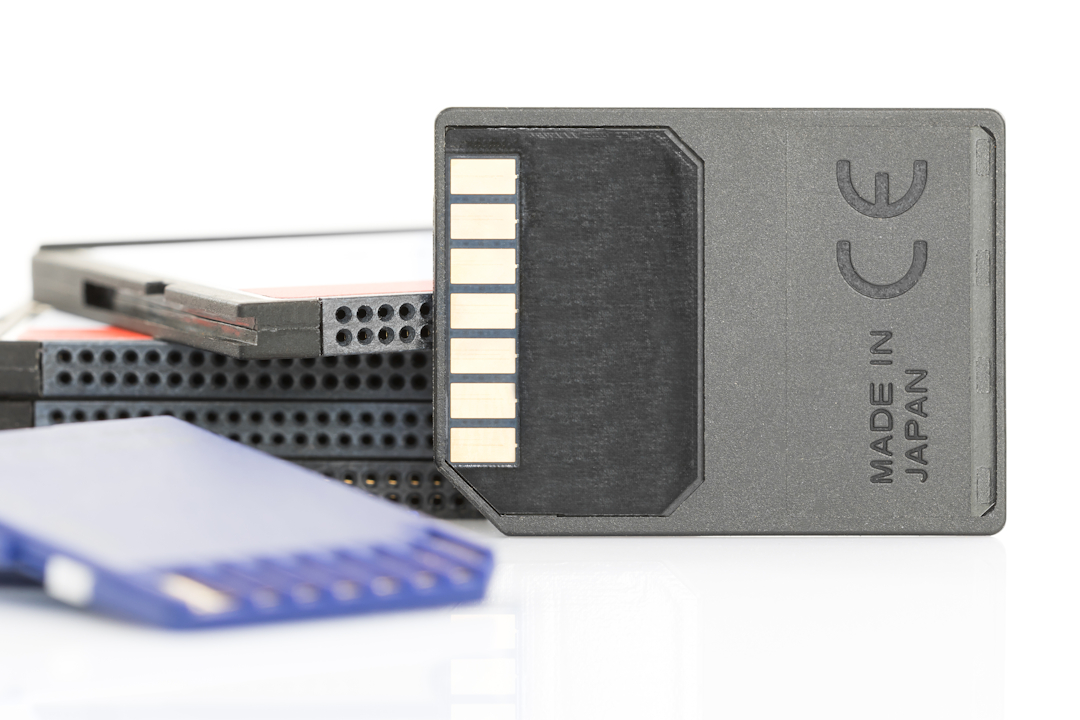
UD info, a Taiwan-based manufacturer of industrial storage components, announced in a press release on August 2 that it has introduced a new line of SD and microSD memory cards built specifically for industrial and embedded computing environments rather than the consumer market. The distinction matters for any company building hardware that has to keep running unattended for years in the field. Drones, factory sensors, transportation systems, and medical devices all depend on storage that will not silently fail or get discontinued mid-production run, a problem ordinary consumer memory cards are not designed to solve.
Firmware Customization and Fixed BOM
The core of UD info’s pitch is firmware-level customization. Rather than shipping the same generic firmware to every customer, the company’s engineering team tunes card behavior, such as power consumption and write patterns, to a specific application. The release points to drone-based aerial inspection, mapping, and surveillance as one target use case, where consistent data logging and reliable image capture during flight are critical.
UD info also offers fixed bill-of-materials (BOM) commitments, meaning the exact hardware and firmware configuration a customer qualifies stays the same across future production runs. This addresses a real pain point in industrial and embedded design: qualifying a storage component for a regulated or safety-critical system can take months, and a supplier quietly substituting a different memory chip or controller later can force a costly requalification. A fixed BOM commitment is a supply-chain promise, not a technical claim about the product’s performance, so it is worth reading as exactly that.
What TLC and pSLC Mean for Durability
The product line includes two memory types worth defining. 3D TLC (triple-level cell) NAND stores three bits per memory cell, which is how the line reaches capacities up to 256GB, but it wears out faster under heavy, repeated writes. 3D pSLC (pseudo-single-level cell) reconfigures that same TLC hardware to store only one bit per cell, sacrificing capacity in exchange for significantly better write endurance and reliability, according to the release. That trade-off is aimed at write-intensive or harsh-environment deployments, such as continuous industrial data logging, where a card is written to constantly rather than occasionally, as in a typical consumer camera.
The pSLC series is rated for a -40°C to 85°C operating range, wide enough for outdoor industrial and transportation use. UD info says SD and µSSD variants rated up to 105°C are currently under development; they are not yet a shipping product, and the company has not given a timeline for their release.
Built-In Monitoring and Security Features
Beyond firmware tuning, UD info’s cards can be configured with several optional features aimed at system integrators. PID/VID customization lets a card identify itself with a customer-specific product and vendor ID rather than a generic one, which can simplify device recognition in a closed industrial system. LBA (logical block addressing) customization adjusts how storage space is mapped and allocated for a specific workload. S.M.A.R.T. health monitoring, a standard already common in hard drives and SSDs, reports wear and failure indicators back to the host system so maintenance teams can replace a card before it fails rather than after, instead of discovering the failure only once it has already happened in the field. Hardware write protection and secure erase round out the list, aimed at preventing unauthorized data changes and allowing full data sanitization when a device is retired or redeployed, which matters for customers in medical or defense-adjacent applications where retired hardware cannot simply be discarded with data intact.
Where This Fits in the Broader Storage Market
Industrial and embedded storage is a distinct, smaller sub-market from consumer memory cards, and it tends to compete on reliability and supply continuity rather than price or raw capacity. A consumer buying a microSD card for a phone or camera mostly cares about price per gigabyte and read/write speed; a company embedding storage into a factory sensor or a piece of transportation equipment instead needs the exact same part, with the exact same behavior, to still be available and unchanged three or five years later. That is a fundamentally different product requirement, and it is why industrial suppliers compete on qualification support and long-term availability rather than on capacity alone.
As drones, factory automation, and other edge computing devices proliferate, demand for storage that can survive vibration, temperature swings, and years of continuous writes without a supplier discontinuing the part has grown alongside them. UD info’s own market position is to serve that niche across industrial automation, transportation, medical, energy, aerospace, and embedded computing, according to the company; the release does not include independent market-share or market-size data to verify how the company’s offering compares to competitors such as other established industrial NAND and SD card suppliers in the same space.
What’s Next
UD info says customer samples of the new SD and microSD lines will be available starting this month. The company has not disclosed pricing, and as a privately held manufacturer, UD info does not report public financials or trade under a stock ticker; this article covers a product announcement, not an investment opportunity.
Sources
UD info Launches One-Stop Industrial-Grade SD and microSD Card Solutions, PRNewswire, August 2, 2026.
Editorial Disclosure
This article is based on a press release issued by UD info on August 2, 2026, distributed via PRNewswire. UD info is a privately held company; no securities are discussed in this article and no ticker or exchange applies. Next Gen Tech Stocks was not compensated for this coverage. Statements regarding product timelines, including SD and µSSD variants rated up to 105°C, are forward-looking and describe products currently under development, not shipping products. This article is for informational and educational purposes only and does not constitute an investment recommendation. See our full Disclaimer.