Water scarcity is one of the most consequential resource constraints of the coming decades, affecting agriculture, industry, and basic human needs across growing portions of the globe. Unlike energy, where multiple abundant alternative sources exist, fresh water has no substitute — only technology that can extend, purify, or create new supply from sources that were previously unusable. Desalination, water recycling, and advanced filtration technology are becoming essential infrastructure in water-stressed regions, creating a durable and underappreciated investment theme within the broader future industries landscape.
The Scale and Nature of the Water Challenge
Fresh water represents a small fraction of the planet’s total water resources, and its geographic distribution does not align with population growth and economic development patterns. Regions experiencing the fastest population and economic growth are disproportionately located in water-stressed areas, creating a structural mismatch between where water demand is growing fastest and where natural fresh water supply is most abundant.
Agriculture consumes the large majority of global fresh water withdrawals, making agricultural water efficiency a central lever for addressing scarcity alongside the development of new supply sources. Industrial water use, including the substantial water requirements of semiconductor manufacturing and data center cooling discussed elsewhere in this publication, represents a smaller but rapidly growing and strategically significant category of demand, particularly as technology manufacturing and AI infrastructure expand in water-stressed regions.
Climate variability is intensifying water stress in many regions through more extreme precipitation patterns — longer droughts punctuated by more intense but less frequent rainfall events that are harder to capture and store efficiently using traditional reservoir infrastructure. This variability is driving increased investment in technologies that can provide reliable water supply independent of natural precipitation patterns, of which desalination is the most significant category.
Desalination Technology and Its Economics
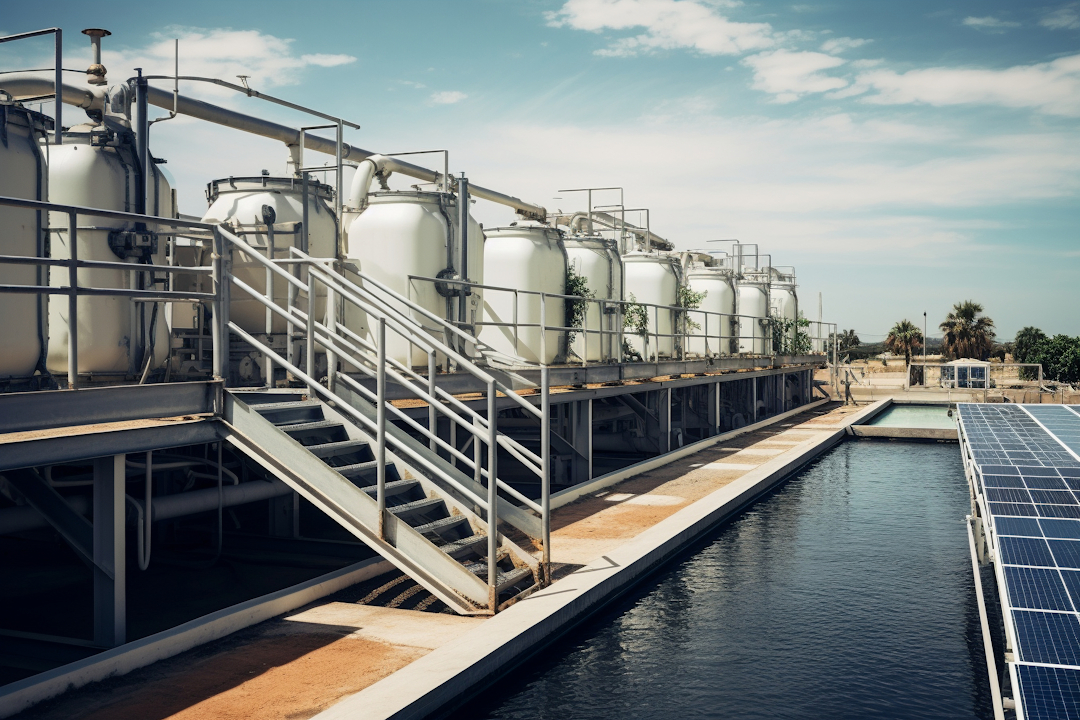
Reverse osmosis has become the dominant desalination technology, using high pressure to force seawater or brackish water through semi-permeable membranes that allow water molecules to pass while blocking salt and other dissolved solids. The technology has improved substantially over recent decades: membrane efficiency has increased, energy recovery systems that capture the pressure energy from the concentrated brine stream have reduced net energy consumption significantly, and manufacturing scale has reduced membrane costs.
Energy consumption remains the largest ongoing operating cost of reverse osmosis desalination, making the technology’s economics closely tied to electricity costs and creating a natural synergy with the falling cost of renewable electricity discussed elsewhere in this publication. Desalination facilities co-located with or powered by dedicated solar or wind generation can achieve more favorable and more predictable operating economics than facilities dependent on grid electricity subject to price volatility.
Brine management — the disposal or further treatment of the concentrated salt solution that remains after fresh water extraction — represents both an environmental challenge and, increasingly, a commercial opportunity. Technologies that can extract valuable minerals from desalination brine, including lithium and other materials with rising demand from the battery supply chain discussed elsewhere in this publication, are attracting investment interest as a way to improve desalination project economics while addressing brine disposal environmental concerns.
Water Recycling and Reuse
Advanced water recycling — treating wastewater to a quality sufficient for reuse in agricultural irrigation, industrial processes, or, with additional treatment steps, direct potable reuse — represents a complementary approach to desalination that can be more cost-effective in many applications since it does not require the energy-intensive removal of high salt concentrations that seawater desalination demands.
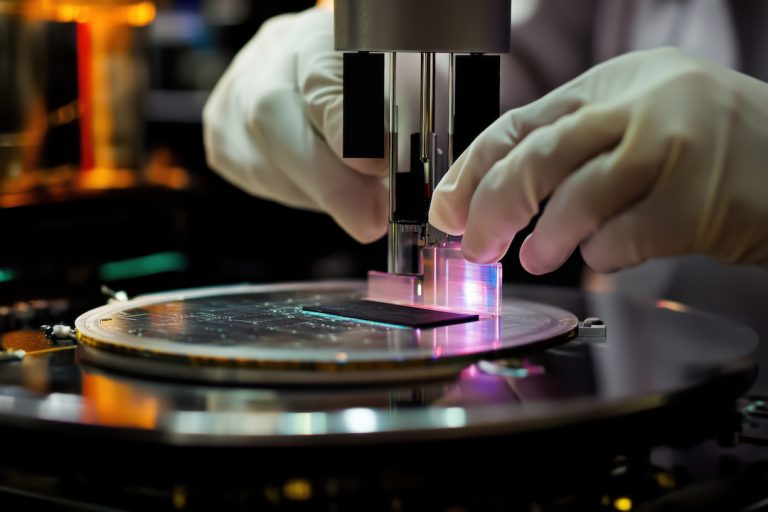
Industrial water reuse has become a particular focus for water-intensive manufacturing sectors, including semiconductor fabrication, which requires enormous volumes of ultra-pure water and has strong economic and increasingly regulatory incentives to recycle and reuse water within the manufacturing process rather than depending entirely on fresh water withdrawal. Semiconductor manufacturers operating in water-stressed regions have invested substantially in closed-loop water recycling systems as both a cost management and supply security measure.
Direct potable reuse, in which treated wastewater is purified to drinking water standards and returned directly to the water supply, represents the most advanced and, historically, the most publicly contentious application of water recycling technology. Improved treatment technology and growing public acceptance, driven partly by the increasingly visible consequences of water scarcity in affected regions, have supported expanding adoption of direct potable reuse in several water-stressed markets, representing a significant potential growth market for advanced water treatment technology.
Investing in Water Technology
Water technology investing spans desalination equipment and engineering firms, membrane and filtration material manufacturers, water treatment chemical companies, and the utilities and infrastructure operators that own and operate water treatment facilities under long-term contracts. Each segment carries distinct capital intensity, margin structure, and growth characteristics that merit separate evaluation.
Membrane technology, as the core enabling material for both desalination and advanced water recycling, represents a segment with meaningful technical differentiation and defensible intellectual property for companies that have achieved genuine performance advantages in membrane efficiency, durability, and fouling resistance. This technical differentiation supports more attractive margin structures than the more commoditized segments of the water infrastructure value chain.
Water utilities and infrastructure operators, particularly those with long-term contracts to build, own, and operate desalination and water recycling facilities, offer investment characteristics similar to other regulated or contracted infrastructure assets: predictable, long-duration cash flows with lower growth but also lower volatility than the technology and equipment segments of the water value chain. The appropriate allocation between these segments depends on an investor’s risk tolerance and desired exposure to the underlying growth of water scarcity-driven demand.
Conclusion
Water scarcity is a structural, long-term challenge without a simple substitute resource, which makes water technology one of the more durable investment themes within the broader future industries landscape. Desalination, water recycling, and advanced membrane technology are moving from niche applications in the most water-stressed regions toward mainstream infrastructure as climate variability and population growth intensify pressure on natural water supplies. For investors, the water technology sector offers a combination of essential-infrastructure stability and genuine technology-driven growth opportunity.
Key Takeaways
- Water scarcity is a structural challenge with no substitute resource, driven by the geographic mismatch between population growth and natural fresh water supply.
- Reverse osmosis desalination economics are closely tied to energy costs, creating a natural synergy with falling renewable electricity prices.
- Water recycling and industrial reuse are often more cost-effective than desalination and are becoming standard practice in water-intensive manufacturing.
- Membrane technology offers the most defensible technical differentiation in the water value chain, while utilities offer infrastructure-like stability.
Editorial Disclosure
This article is produced by NextGenTechStocks.com for informational and educational purposes only. NextGenTechStocks.com has not received any compensation from any company, management team, investor relations representative, or any third party in connection with the publication of this article. No staff member or principal of NextGenTechStocks.com holds a position in any security mentioned in this article at the time of publication. The information presented is based on publicly available sources and is intended to provide general market education only. Investing in technology stocks carries significant risk, including the potential loss of capital. Readers are encouraged to conduct their own due diligence and consult a qualified financial advisor before making any investment decisions. For more information, please see our full Disclaimer at NextGenTechStocks.com.