
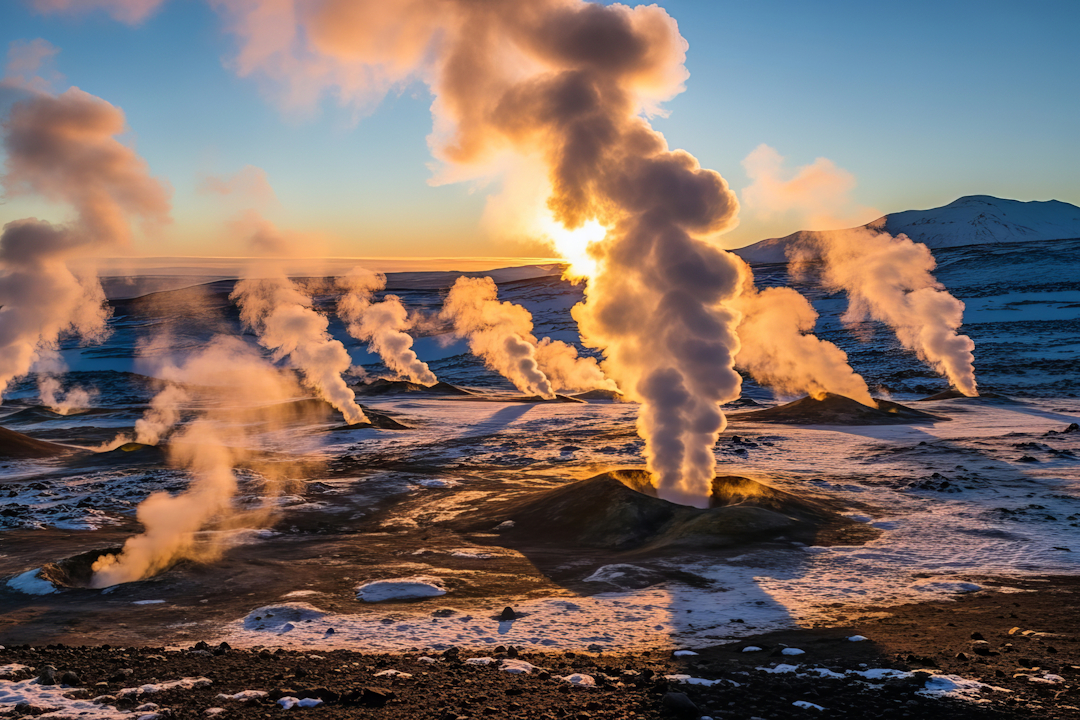
Beneath the Earth’s surface lies a source of clean, continuous energy that has been commercially exploited for over a century but has never scaled to the significance of solar, wind, or nuclear power. That may be changing. Technology borrowed directly from the oil and gas industry — horizontal drilling and hydraulic stimulation — is unlocking geothermal resources far beyond the narrow geological conditions that limited conventional geothermal power to a handful of locations worldwide. The result is a credible case for geothermal as a meaningfully larger contributor to the clean, dispatchable power that grids increasingly need.
Why Geothermal Has Been a Niche Resource
Conventional geothermal power generation requires a specific and relatively rare geological combination: naturally occurring hot rock formations close enough to the surface to be economically accessible, combined with sufficient natural permeability and water content to allow steam or hot water to be extracted at commercial volumes. These conditions exist reliably only in geologically active regions — areas near tectonic plate boundaries or volcanic activity — which has concentrated conventional geothermal development in a small number of countries and limited its overall contribution to global electricity generation.
Where conventional geothermal resources do exist, the technology has proven genuinely attractive: geothermal power plants provide continuous, dispatchable electricity with a capacity factor — the percentage of time a plant operates at its rated output — that exceeds solar and wind and rivals or exceeds nuclear power. This reliability, combined with minimal land use and negligible direct carbon emissions, has made geothermal a valued component of the generation mix in the countries fortunate enough to have accessible resources.
The geographic limitation of conventional geothermal has been the binding constraint preventing broader adoption. Most of the world’s landmass sits atop hot rock at depths and temperatures that could theoretically support geothermal power generation, but without the natural permeability and fluid content that conventional geothermal technology requires, that heat has remained economically inaccessible using traditional drilling and extraction methods.
Enhanced Geothermal: Borrowing From Shale
Enhanced geothermal systems address the permeability limitation directly by creating engineered pathways for fluid circulation in hot rock formations that lack sufficient natural permeability. The core technologies — horizontal drilling to access larger volumes of hot rock from a single well pad, and hydraulic stimulation to create networks of fractures that allow fluid to circulate and absorb heat — are directly adapted from techniques the oil and gas industry developed and refined during the shale drilling boom of the past two decades.
This technology transfer has been significant because it allows enhanced geothermal developers to draw on a mature supply chain of drilling contractors, equipment manufacturers, and engineering expertise that the oil and gas industry built over decades, rather than developing entirely novel drilling capabilities from scratch. Several enhanced geothermal projects have successfully demonstrated commercial-scale fluid circulation and heat extraction in recent years, providing the operational validation needed to support larger-scale commercial development.
The economic case for enhanced geothermal depends heavily on drilling costs, which represent the majority of total project capital expenditure. Drilling cost reduction, following learning curve patterns similar to those observed in shale oil and gas development, is the central variable that will determine how competitive enhanced geothermal becomes relative to other clean, dispatchable power sources. Early commercial projects are providing the cost data needed to assess how quickly this learning curve is likely to progress.
Geothermal for Heating and Industrial Heat
Electricity generation is not the only valuable application of geothermal resources. Direct-use geothermal heat, extracted at lower temperatures than those required for efficient power generation, can supply district heating systems, greenhouse agriculture, and certain industrial processes that require consistent, moderate-temperature heat. These applications can access a broader range of geothermal resources than electricity generation, since they do not require the higher temperatures that efficient power generation demands.
Geothermal heat pumps, which use the relatively stable temperature of shallow ground as a heat source in winter and heat sink in summer, represent a distinct and already commercially mature category of geothermal technology applicable to building heating and cooling almost anywhere, regardless of deep geological conditions. This technology addresses building heating and cooling demand — a significant contributor to both electricity consumption and carbon emissions — with substantially higher efficiency than conventional heating and cooling systems.
Industrial decarbonization applications for geothermal heat are an emerging area of interest, given that many industrial processes require heat at temperatures achievable through advanced geothermal technology but currently supplied through combustion of fossil fuels. As enhanced geothermal technology matures and drilling costs decline, industrial process heat represents a potentially significant additional market for geothermal energy beyond electricity generation alone.
The Investment Case for Geothermal
Geothermal energy investing spans a spectrum from mature conventional geothermal operators in geologically favorable regions, offering infrastructure-like investment characteristics with predictable, contracted power revenue, to earlier-stage enhanced geothermal developers whose investment case depends on continued technical progress and cost reduction that has not yet been fully validated at commercial scale across a broad range of geological conditions.
The drilling technology and service companies that support geothermal development — many of which also serve the oil and gas industry — represent a way to gain exposure to geothermal growth without concentrated dependence on any single enhanced geothermal developer’s project economics. These companies benefit from geothermal drilling activity regardless of which developers ultimately achieve the greatest commercial success, offering a diversified approach to the sector.
Technology and utility company interest in geothermal has grown alongside the broader search for reliable, carbon-free power to support electricity-intensive operations including AI data centers, discussed elsewhere in this publication. Geothermal’s combination of high capacity factor and zero direct carbon emissions makes it an attractive complement to the intermittent renewable generation that dominates current clean energy deployment, and this demand signal from technology companies is providing an additional source of commercial validation for enhanced geothermal development.
Conclusion
Geothermal energy is transitioning from a geographically constrained niche resource to a technology with the potential for much broader deployment, enabled by drilling techniques borrowed directly from the oil and gas industry. The combination of high capacity factor, minimal land use, and zero direct emissions makes enhanced geothermal an attractive complement to variable renewable generation if drilling costs continue to decline along a learning curve similar to shale development. For investors, geothermal offers exposure to a genuinely differentiated clean energy technology with both mature infrastructure and higher-growth technology development opportunities.
Key Takeaways
- Geothermal power offers a capacity factor exceeding solar and wind, but conventional geothermal has been geographically limited to a small number of regions.
- Enhanced geothermal systems use horizontal drilling and hydraulic stimulation, borrowed from shale oil and gas, to unlock hot rock resources far more broadly.
- Drilling cost reduction, following a shale-like learning curve, is the central variable determining enhanced geothermal’s long-term competitiveness.
- Technology company demand for reliable, carbon-free power is providing an additional commercial validation signal for geothermal development.
Editorial Disclosure
This article is produced by NextGenTechStocks.com for informational and educational purposes only. NextGenTechStocks.com has not received any compensation from any company, management team, investor relations representative, or any third party in connection with the publication of this article. No staff member or principal of NextGenTechStocks.com holds a position in any security mentioned in this article at the time of publication. The information presented is based on publicly available sources and is intended to provide general market education only. Investing in technology stocks carries significant risk, including the potential loss of capital. Readers are encouraged to conduct their own due diligence and consult a qualified financial advisor before making any investment decisions. For more information, please see our full Disclaimer at NextGenTechStocks.com.