
The dominant narrative of the past decade has been centralization: computing workloads migrating from local devices to massive cloud data centers. Edge computing represents a partial reversal of that trend, pushing computation back toward the devices and locations where data is generated. The drivers are latency, bandwidth cost, privacy, and reliability — and the growth of AI applications that require real-time responses has made edge computing one of the more consequential architectural shifts in the current computing landscape.
Why Not Everything Belongs in the Cloud
Cloud computing offers compelling advantages: elastic scalability, reduced capital expenditure, and access to specialized hardware without owning it. But sending data to a remote data center for processing and waiting for a response introduces latency — the round-trip time for data to travel to the cloud and back — that is unacceptable for certain applications. An autonomous vehicle cannot wait even a hundred milliseconds for a cloud server to process a decision about an obstacle in its path. A factory robot performing precision assembly cannot tolerate network interruptions that would halt or corrupt its operation.
Bandwidth cost is a second driver of the shift toward edge computing. A single high-resolution video camera generates a continuous stream of data that, if transmitted in full to a cloud data center for processing, would consume significant network bandwidth and incur substantial data transfer costs. Processing that video at the edge — analyzing it locally and transmitting only the relevant results, such as an alert or a classification, rather than the raw video stream — dramatically reduces bandwidth requirements and associated costs, particularly at the scale of thousands or millions of connected devices.
Privacy and data sovereignty considerations are increasingly important drivers as well. Processing sensitive data — medical information, financial transactions, biometric data — locally rather than transmitting it to a remote cloud data center can satisfy regulatory requirements and privacy expectations that cloud-centric architectures struggle to meet, particularly in jurisdictions with strict data localization requirements.
The Hardware Enabling Edge AI
Running AI models at the edge requires specialized hardware capable of performing machine learning inference efficiently within the power, size, and cost constraints of edge devices — constraints that are far more restrictive than those applicable to cloud data centers with access to abundant power and space. Edge AI chips are designed to maximize computational efficiency per watt, often through specialized architectures that trade some flexibility for dramatically improved efficiency on the specific types of computation that AI inference requires.
Model compression techniques — reducing the size and computational requirements of AI models while preserving as much of their accuracy as possible — are a critical software complement to edge hardware. Techniques including quantization, which reduces the numerical precision used in model calculations, and pruning, which removes model parameters that contribute little to overall accuracy, allow models originally trained on powerful cloud infrastructure to run efficiently on much more constrained edge hardware.
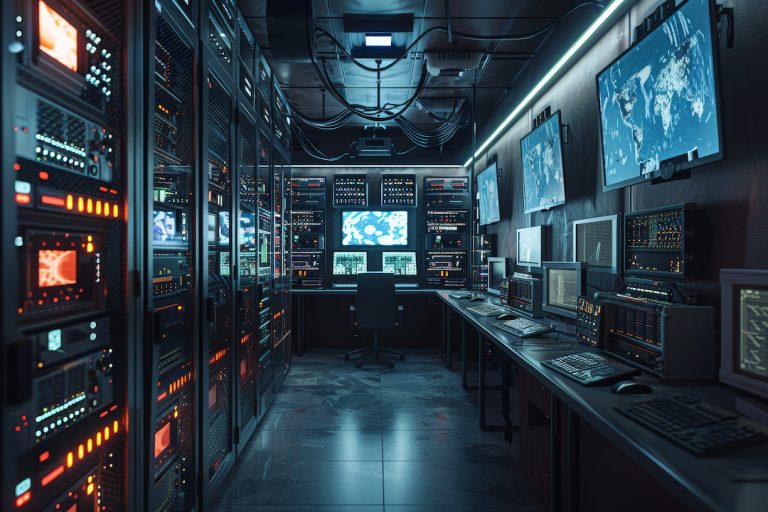
The range of edge computing hardware spans an enormous spectrum, from powerful edge servers deployed in factories and retail locations that approach data center-class computing capability, down to tiny microcontroller-class chips embedded in sensors and consumer devices that can run simple AI models using a fraction of a watt of power. This spectrum of edge computing capability is enabling AI deployment in an enormous range of applications that would be impractical or impossible to serve from centralized cloud infrastructure.
Industrial and Automotive Applications
Manufacturing has become one of the most significant adopters of edge computing, driven by the requirements of real-time quality control, predictive maintenance, and robotic coordination. AI-powered visual inspection systems deployed directly on production lines can identify defects at the speed of manufacturing, without the latency that would be introduced by transmitting each image to a cloud data center for analysis. Predictive maintenance systems that monitor equipment vibration, temperature, and other sensor data in real time can detect the early signs of equipment failure and trigger maintenance before a costly breakdown occurs.
Automotive applications represent one of the most demanding edge computing environments, given the safety-critical nature of decisions that must be made in real time as a vehicle moves through its environment. Advanced driver assistance systems and autonomous driving capabilities depend on edge computing hardware capable of processing multiple camera, radar, and lidar data streams simultaneously and generating driving decisions within milliseconds — a computational requirement that no cloud round-trip could satisfy given current network latency characteristics.
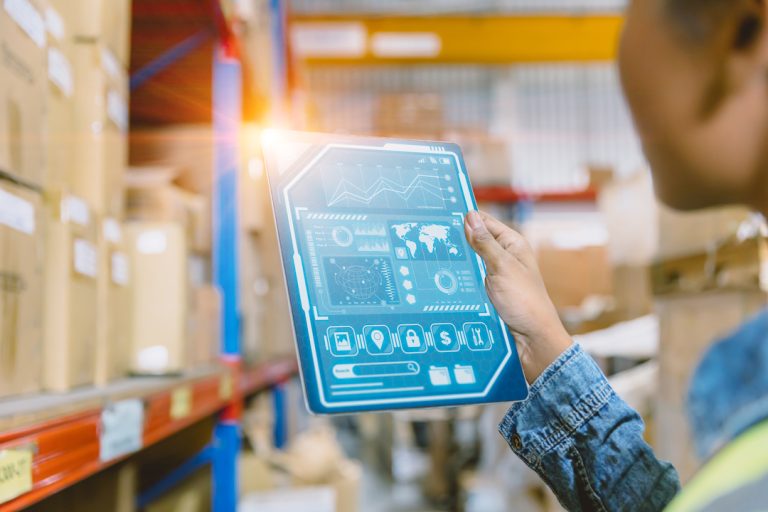
Retail and smart infrastructure applications, including AI-powered surveillance and security systems, automated checkout, and traffic management systems, are deploying edge computing to process video and sensor data locally, reducing both latency and the substantial bandwidth costs that would result from transmitting continuous video streams from large numbers of cameras to centralized cloud infrastructure.
The Edge-Cloud Investment Landscape
Edge computing does not represent a wholesale replacement of cloud computing but rather a complementary architecture where different workloads are matched to the computing location best suited to their specific latency, bandwidth, and privacy requirements. Cloud infrastructure remains essential for training AI models, which requires the massive computational scale that only centralized data centers can provide, as well as for workloads without stringent latency requirements. Edge computing handles the inference and real-time processing tasks where proximity to the data source is essential.
The companies best positioned in edge computing span multiple layers of the technology stack: semiconductor companies designing efficient edge AI chips, software companies developing model compression and edge deployment tools, and systems integrators building complete edge computing solutions for specific industrial and commercial applications. Each layer has distinct competitive dynamics and investment characteristics.
The growth trajectory of edge computing is closely tied to the broader growth of AI applications requiring real-time decision-making in physical environments: autonomous vehicles, industrial robotics, and smart infrastructure. As these application categories scale, the demand for the specialized edge computing hardware and software that enables them scales correspondingly, making edge computing a derivative but increasingly significant investment theme within the broader AI and advanced computing landscape.
Conclusion
Edge computing represents the practical recognition that not every AI workload belongs in a centralized cloud data center. Latency-sensitive, bandwidth-intensive, and privacy-conscious applications are driving computation back toward the devices and locations where data originates, creating a complementary architecture to cloud computing rather than a replacement for it. For investors, edge computing offers exposure to the growth of physical-world AI applications — autonomous vehicles, industrial automation, smart infrastructure — that depend fundamentally on computing happening close to where decisions must be made.
Key Takeaways
- Latency, bandwidth cost, and privacy requirements are driving specific AI workloads away from centralized cloud computing toward the edge.
- Specialized edge AI chips and model compression techniques enable machine learning inference within the power and cost constraints of edge devices.
- Manufacturing and automotive applications represent the most demanding and most mature edge computing use cases today.
- Edge computing complements rather than replaces cloud computing, creating investment opportunities across chips, software, and systems integration.
Editorial Disclosure
This article is produced by NextGenTechStocks.com for informational and educational purposes only. NextGenTechStocks.com has not received any compensation from any company, management team, investor relations representative, or any third party in connection with the publication of this article. No staff member or principal of NextGenTechStocks.com holds a position in any security mentioned in this article at the time of publication. The information presented is based on publicly available sources and is intended to provide general market education only. Investing in technology stocks carries significant risk, including the potential loss of capital. Readers are encouraged to conduct their own due diligence and consult a qualified financial advisor before making any investment decisions. For more information, please see our full Disclaimer at NextGenTechStocks.com.