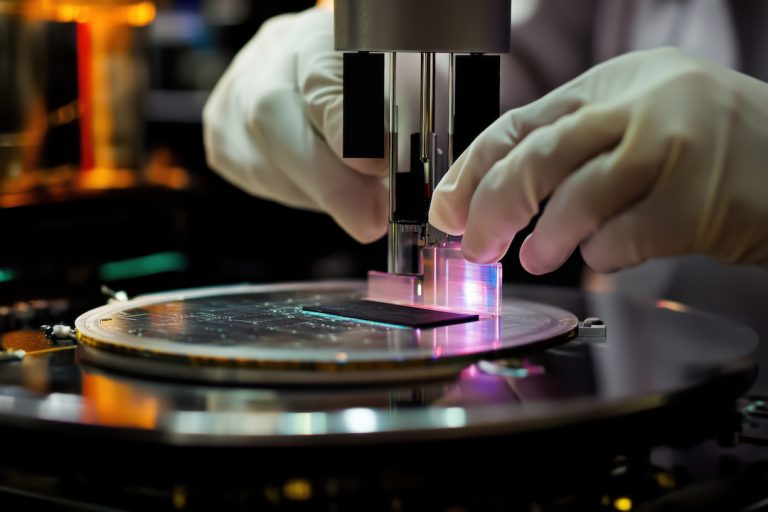

Manufacturing has always been constrained by the physical conditions of Earth: gravity, atmosphere, and the presence of contaminants that limit the purity and structure achievable in materials production. Microgravity and vacuum, freely available in low Earth orbit, remove those constraints entirely. A small but growing group of companies is betting that certain high-value products — pharmaceuticals, optical fiber, and advanced semiconductor materials among them — can only reach their theoretical performance limits when manufactured beyond Earth’s gravity well.
Why Microgravity Changes Manufacturing Outcomes
On Earth, gravity drives a phenomenon called sedimentation: denser materials sink and lighter materials rise whenever a mixture is left undisturbed, and convection currents form whenever temperature gradients exist within a fluid. Both effects introduce structural imperfections into materials that are grown or crystallized from a liquid or gas phase — the atomic-level uniformity that would otherwise be achievable is disrupted by the physical settling and mixing that gravity imposes.
In microgravity, these effects are dramatically reduced. Crystals can grow more uniformly, without the internal stress and defects that gravity-driven convection introduces. Fluids can be mixed and held in configurations that would be impossible to maintain against gravity on Earth. For a narrow set of high-value materials, this translates directly into products with fewer defects, higher purity, and performance characteristics that cannot be replicated by any terrestrial manufacturing process, regardless of how sophisticated that process becomes.
The vacuum of space offers a complementary advantage for certain manufacturing processes. Producing ultra-pure materials on Earth requires expensive vacuum chambers to exclude atmospheric contamination. In orbit, that vacuum is simply the ambient environment, available without the energy cost of creating and maintaining an artificial vacuum. For processes that are highly sensitive to contamination, this represents both a quality advantage and, potentially, a cost advantage once the logistics of space access become more routine.
The Leading Candidate Applications
Optical fiber manufacturing has emerged as one of the most commercially credible early applications for in-space manufacturing. Specialty optical fiber made from certain glass compositions exhibits significantly lower signal loss when manufactured in microgravity, because the crystallization process that occurs during fiber drawing is disrupted by gravity-driven effects on Earth. Fiber with meaningfully lower transmission loss could reduce the number of signal amplification points required in long-distance telecommunications networks, creating a clear commercial value proposition even before accounting for the premium pricing that space-manufactured products would command.
Pharmaceutical crystallization is another leading application area. The therapeutic effectiveness, stability, and manufacturability of many drugs depend on the specific crystal structure achieved during production. Protein crystals grown in microgravity have, in numerous research missions, exhibited larger size and greater structural regularity than crystals grown under Earth gravity, providing pharmaceutical researchers with better data for understanding molecular structure and potentially enabling drug formulations that are difficult or impossible to achieve through terrestrial crystallization alone.
Semiconductor and advanced materials research in microgravity has explored the production of ultra-pure crystals for specialized electronics applications, where the elimination of gravity-driven defects could enable performance characteristics beyond what terrestrial semiconductor manufacturing can achieve. This application remains earlier in its commercial development than optical fiber or pharmaceutical crystallization but represents a potentially larger addressable market given the scale of the global semiconductor industry.
The Economics of Space Manufacturing
The commercial viability of in-space manufacturing rests on a straightforward but demanding economic test: the value premium that a space-manufactured product commands must exceed the cost of manufacturing it in orbit and returning it to Earth. This calculation has become more favorable as launch costs have fallen and as commercial space stations and free-flying manufacturing platforms have reduced the cost of accessing microgravity relative to the earlier era when the only available platform was the International Space Station.
The most commercially credible near-term applications share a common characteristic: high value density. A product that commands a very high price per unit of mass — specialty pharmaceuticals, precision optical fiber, advanced semiconductor crystals — can absorb the substantial cost of space manufacturing and still be commercially viable. Lower value density products are unlikely to become commercially manufacturable in space until launch and return costs fall substantially further than current trajectories suggest over the coming decade.
The emergence of commercial space stations, developed as successors to the International Space Station, is a critical enabler for the industry’s growth. These new platforms are being designed with manufacturing operations as a primary use case, rather than the research-focused design of previous space stations, and are expected to provide more cost-effective and scalable access to microgravity manufacturing conditions than has previously been available.
Assessing the Investment Opportunity
In-space manufacturing remains an early-stage industry with a small number of companies that have demonstrated manufacturing processes at small scale and are working toward commercial-scale production. The investment thesis requires patience and a tolerance for the technical and logistical risks inherent in an industry that depends on reliable, cost-effective access to space.
The companies best positioned in this emerging sector are those that have identified specific, high-value-density products with credible performance advantages from space manufacturing, established relationships with launch providers and space station operators to secure reliable access to microgravity, and built a realistic path from demonstration-scale production to commercial volumes that can generate meaningful revenue.
The broader space infrastructure companies — launch providers, commercial space station developers, and in-space logistics companies — represent an indirect way to gain exposure to the growth of in-space manufacturing without the concentrated risk of betting on which specific manufacturing application will prove most commercially successful. As the manufacturing industry grows, it will generate demand for launch services and orbital infrastructure regardless of which specific product categories lead that growth.
Conclusion
In-space manufacturing sits at the frontier of the commercial space economy, offering the possibility of products that simply cannot be made as well anywhere on Earth. The economics remain demanding, and the industry is still proving itself at commercial scale. But the physics is real, the early demonstrations have been credible, and the falling cost of space access is steadily expanding the range of products for which the microgravity premium justifies the cost of orbital production. For investors with a long time horizon, it represents one of the more scientifically grounded frontiers of the space economy.
Key Takeaways
- Microgravity eliminates gravity-driven sedimentation and convection, enabling materials with fewer defects and greater structural uniformity.
- Optical fiber, pharmaceutical crystallization, and advanced semiconductor materials are the most commercially credible near-term applications.
- High value density is the critical economic requirement for space-manufactured products to justify launch and return costs.
- Commercial space stations designed for manufacturing are a key infrastructure enabler for the industry’s next phase of growth.
Editorial Disclosure
This article is produced by NextGenTechStocks.com for informational and educational purposes only. NextGenTechStocks.com has not received any compensation from any company, management team, investor relations representative, or any third party in connection with the publication of this article. No staff member or principal of NextGenTechStocks.com holds a position in any security mentioned in this article at the time of publication. The information presented is based on publicly available sources and is intended to provide general market education only. Investing in technology stocks carries significant risk, including the potential loss of capital. Readers are encouraged to conduct their own due diligence and consult a qualified financial advisor before making any investment decisions. For more information, please see our full Disclaimer at NextGenTechStocks.com.