
Technology investing rewards those who can identify important developments early — before they become consensus, and before valuations reflect their potential. The most compelling investment opportunities of the next decade are being seeded now in laboratories and early-stage companies working at the intersection of biology, physics, materials science, and computing. Understanding which scientific frontiers are maturing toward commercial relevance — and which remain decades away — is the analytical challenge that separates thoughtful technology investors from those chasing narratives.
Longevity and Precision Medicine
The biology of aging has moved from a subject of philosophical speculation to an area of serious scientific investigation with real experimental results. Research has identified several molecular mechanisms that contribute to cellular aging — DNA damage accumulation, epigenetic changes, stem cell exhaustion, and the accumulation of dysfunctional senescent cells — and demonstrated in animal models that interventions targeting these mechanisms can extend healthy lifespan. The translation of these findings to human therapeutics is the challenge that separates current science from commercial medicine.
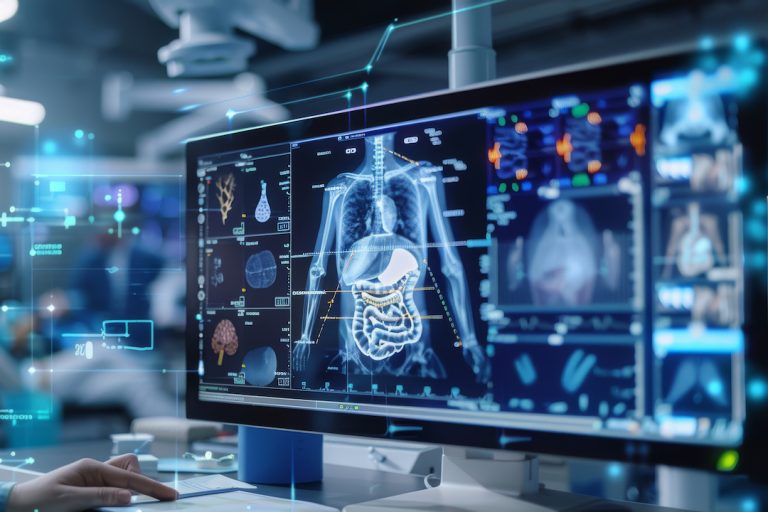
Precision medicine — the delivery of treatments tailored to the specific genetic, molecular, and environmental characteristics of each patient — is advancing through a combination of genomic sequencing, biomarker development, and AI-powered diagnostic systems. Oncology has been the early proving ground for precision medicine: the identification of specific genetic mutations driving tumor growth and the development of targeted therapies that block those specific mutations has transformed survival outcomes for several cancer types. The same approach is being extended to rare diseases, autoimmune conditions, and eventually to common conditions where the patient population can be stratified by molecular subtype.
Gene therapy and cell therapy represent the frontier of precision medicine, offering the possibility of curative treatments for diseases that current medicine can only manage. The commercial success of the first approved gene therapies has demonstrated that the approach is scientifically and regulatory viable. The challenge for the next generation of therapies is reducing the manufacturing cost and complexity to the point where these treatments can serve larger patient populations economically.
Brain-Computer Interfaces
Brain-computer interfaces — systems that establish a direct communication channel between the brain and external devices — have been the subject of research for decades, primarily in academic settings focused on restoring function to patients with paralysis or sensory loss. The entry of well-funded commercial ventures into the space has accelerated development timelines and expanded the scope of ambition beyond medical restoration to cognitive augmentation and new modes of human-computer interaction.
The technical challenge of brain-computer interfaces is formidable. The brain contains approximately 86 billion neurons forming trillions of synaptic connections, and the electrical signals that carry information between them are measured in microvolts. Reading and interpreting these signals at the resolution needed for high-bandwidth communication requires electrodes in close proximity to the neurons of interest, which means either non-invasive approaches with limited bandwidth or invasive implants that provide higher fidelity but carry surgical risk.
The near-term commercial opportunity for brain-computer interfaces is in medical applications: restoring the ability to communicate for patients with ALS and severe paralysis, providing new forms of sensory feedback for prosthetic limb users, and potentially treating neurological conditions like depression and Parkinson’s through closed-loop stimulation. The longer-term vision of consumer brain-computer interface applications remains further from commercial reality, but the technology trajectory from medical implants to less invasive wearable interfaces represents the path that multiple research groups are following.
Advanced Manufacturing and Digital Twins
Additive manufacturing — 3D printing using metals, polymers, ceramics, and composites — has matured from a rapid prototyping technology into a production manufacturing method for specific high-value applications. Aerospace components, medical implants, and custom industrial tooling are being produced by additive manufacturing in commercial quantities, and the technology’s ability to produce geometries impossible by conventional machining enables design optimizations that improve performance and reduce material waste.
Digital twin technology — the creation of real-time virtual replicas of physical systems, updated continuously from sensor data — is transforming the management of complex industrial assets. A digital twin of a jet engine, a wind turbine, or a manufacturing line allows operators to monitor performance, predict failures before they occur, and simulate the effects of operational changes without risking the physical asset. The economic value of digital twins comes from reduced maintenance costs, higher asset utilization, and faster engineering iteration cycles.
The convergence of additive manufacturing, digital twins, and AI-driven design optimization — sometimes called the digital manufacturing ecosystem — represents a transformation in how physical products are designed, simulated, and produced. Companies that have integrated these capabilities are achieving design cycles measured in weeks rather than months and discovering performance optimizations that human designers would not find through conventional approaches.
Evaluating Emerging Science as Investment
Investing in early-stage science is different from investing in commercial technology businesses. The analytical framework must account for the binary nature of scientific progress — a research program either succeeds in demonstrating the key scientific finding or it does not — and the long, uncertain timeline between scientific demonstration and commercial viability. Portfolio approaches that distribute small positions across multiple early-stage companies in a promising scientific domain are generally more appropriate than concentrated bets on individual programs.
The signposts of genuine progress in early-stage scientific fields are worth understanding. Peer-reviewed publication of results in credible scientific journals, replication of findings by independent research groups, regulatory engagement that suggests a viable approval pathway, and commercial partnerships with established companies that have conducted their own technical due diligence are all positive indicators. Hype that outpaces peer-reviewed evidence and fundraising that precedes meaningful scientific results are warning signals.
The most attractive risk-return profile in emerging science investing often lies not in the companies at the scientific frontier but in those one step downstream: the companies providing tools, instruments, reagents, and manufacturing services that the scientific frontier requires. These picks-and-shovels companies benefit from the growth of the scientific activity regardless of which specific research programs ultimately succeed, providing more diversified exposure to a scientific domain with lower binary risk than the frontier science companies themselves.
Conclusion
The scientific fields that will generate the most significant commercial opportunities of the next decade are advancing now, in laboratory settings where their potential is clear but their commercial timelines are uncertain. Longevity science, brain-computer interfaces, advanced manufacturing, and the broader convergence of biology, physics, and computing are each producing genuine progress. For investors, the discipline is developing enough scientific literacy to evaluate that progress honestly and enough patience to wait for the commercial inflection that rewrites valuations when the science finally arrives at scale.
Key Takeaways
- Longevity science and precision medicine are translating laboratory findings into early-stage clinical programs with genuine commercial potential.
- Brain-computer interfaces are advancing from academic research to commercial medical devices, with longer-horizon consumer applications under development.
- Digital twins and additive manufacturing are mature enough to deploy commercially but still early enough to grow substantially.
- Picks-and-shovels companies providing tools and services to emerging scientific fields offer more diversified, lower-binary-risk exposure.
Editorial Disclosure
This article is produced by NextGenTechStocks.com for informational and educational purposes only. NextGenTechStocks.com has not received any compensation from any company, management team, investor relations representative, or any third party in connection with the publication of this article. No staff member or principal of NextGenTechStocks.com holds a position in any security mentioned in this article at the time of publication. The information presented is based on publicly available sources and is intended to provide general market education only. Investing in technology stocks carries significant risk, including the potential loss of capital. Readers are encouraged to conduct their own due diligence and consult a qualified financial advisor before making any investment decisions. For more information, please see our full Disclaimer at NextGenTechStocks.com.