
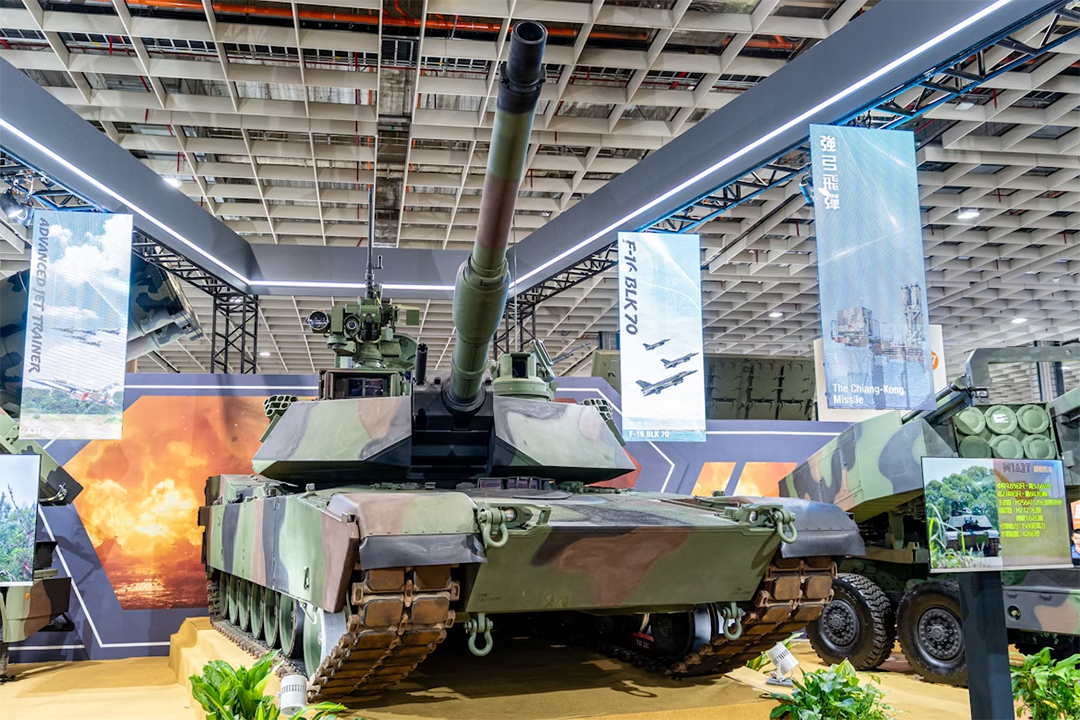
Defense spending has historically been among the most reliable sources of government procurement revenue in the technology industry, but the sector is undergoing a more fundamental transformation than periodic budget cycles would suggest. Artificial intelligence, autonomous systems, directed energy weapons, hypersonic technology, and advanced electronic warfare are redefining what military capability means and which companies are best positioned to deliver it. The defense technology sector is no longer synonymous with legacy prime contractors alone.
The Shift in Military Competitive Advantage
For most of the twentieth century, military competitive advantage was determined primarily by mass: the quantity of soldiers, tanks, ships, and aircraft a nation could field and sustain. The technology that differentiated military systems — precision guidance, stealth aircraft, nuclear submarines — was developed through decades of classified research programs at enormous cost, and the resulting capabilities were so expensive that only major powers could afford them.
The information revolution altered this calculus. Network-centric warfare — the ability to share targeting data, sensor information, and command instructions across a distributed force in real time — became a force multiplier of the first order. A smaller force with superior situational awareness and communication could routinely outperform a larger force operating in relative information isolation. This made software and communications technology central to military effectiveness in ways that were not true in previous eras.
Artificial intelligence is extending this logic further. Autonomous systems — drones, ground vehicles, and eventually maritime vessels — that can operate without constant human oversight represent a potential multiplication of force at a fraction of the manpower cost of equivalent human-operated systems. AI-powered sensor fusion, targeting assistance, and logistics optimization are compressing the time required to make and execute military decisions in ways that have no precedent in the historical record.
The New Defense Technology Ecosystem
Legacy defense contractors — the primes — built their competitive position over decades through deep customer relationships, cleared facility networks, and the organizational capability to manage complex, multi-year government programs. These advantages remain real and the primes retain substantial contract value. What has changed is the emergence of a new tier of defense technology companies that are bringing commercial technology development practices to defense applications.
These companies — sometimes called defense tech startups or dual-use technology companies — are developing capabilities in software-defined radar, AI-enabled reconnaissance, drone swarms, satellite communications, and cybersecurity that the legacy primes were slower to develop. Their development pace is often faster than the traditional defense acquisition process can accommodate, creating both opportunity and friction as government procurement processes adapt to work with smaller, more agile suppliers.
The distinction between commercial technology and military technology has blurred considerably. Cloud computing infrastructure, AI models, commercial satellite imagery, and drone platforms all have both civilian and military applications. Companies operating in this dual-use space face both opportunity — in the form of multiple addressable markets — and complexity, in the form of export control regulations, customer relationship management across different sectors, and reputational considerations that have become more prominent in the current environment.
Key Technology Domains
Unmanned systems represent the defense technology category with the most immediate and visible commercial traction. Tactical drones used for reconnaissance, electronic warfare, and strike missions have demonstrated their value in recent conflicts and are driving rapid procurement across multiple armed forces. The technology is evolving quickly toward swarm capabilities and autonomous coordination that reduce the operator-to-drone ratio required for effective deployment.
Directed energy weapons — high-powered lasers and high-power microwave systems — have moved from research programs toward fielded systems capable of defeating drone threats at a cost per engagement dramatically lower than conventional interceptor missiles. The economics of directed energy are particularly attractive for high-volume, low-cost threat scenarios where conventional missile defense becomes cost-prohibitive.
Cybersecurity and electronic warfare are intertwined domains of growing strategic importance. The ability to disrupt an adversary’s communications, navigation, and weapon system electronics without kinetic engagement is a capability that every major military is investing in developing and defending against. The companies providing offensive and defensive cyber capabilities to government customers operate in a specialized market with high barriers to entry and strong demand growth.
Defense as an Investment Category
Defense spending has historically been characterized by stability rather than growth, with appropriations following budget cycles that smooth out economic volatility. The current period is distinguished by genuine growth in defense budgets across NATO countries and allied nations responding to the changed security environment. This structural increase in demand benefits both legacy prime contractors and the new generation of defense technology companies.
Evaluating defense technology companies requires understanding the procurement cycle. Government contracts move on timelines measured in years, and the revenue recognition profile of defense businesses is different from commercial software companies. Program wins can be transformative for smaller companies, while program losses can be existential. The diversity of a company’s contract portfolio — across programs, customers, and contract types — is an important risk factor that should inform the investment analysis.
The regulatory and clearance requirements of defense contracting create genuine barriers to entry that protect established players. Companies with cleared facilities, established relationships with program offices, and employees holding security clearances have invested years in building a position that competitors cannot replicate quickly. These barriers can translate into pricing power and contract retention rates that support durable returns.
Conclusion
Defense technology is not a static sector dominated by legacy contractors producing incremental improvements to Cold War-era platforms. The integration of artificial intelligence, autonomous systems, and commercial technology into military applications is creating a more dynamic competitive landscape than the industry has seen in decades. For investors, the sector offers the combination of structural demand growth, high barriers to entry, and exposure to some of the most consequential technology development of the current era.
Key Takeaways
- Military competitive advantage has shifted from mass to information dominance, making AI and software central to defense capability.
- A new tier of defense technology companies is challenging legacy primes with faster development cycles and commercial technology approaches.
- Unmanned systems, directed energy, and cybersecurity are the highest-growth technology domains within defense.
- Defense contracting’s long procurement cycles and clearance requirements create barriers to entry that protect established players.
Editorial Disclosure
This article is produced by NextGenTechStocks.com for informational and educational purposes only. NextGenTechStocks.com has not received any compensation from any company, management team, investor relations representative, or any third party in connection with the publication of this article. No staff member or principal of NextGenTechStocks.com holds a position in any security mentioned in this article at the time of publication. The information presented is based on publicly available sources and is intended to provide general market education only. Investing in technology stocks carries significant risk, including the potential loss of capital. Readers are encouraged to conduct their own due diligence and consult a qualified financial advisor before making any investment decisions. For more information, please see our full Disclaimer at NextGenTechStocks.com.