Pacolet Milliken, a family-owned investment firm based in Greenville, South Carolina, said in an October 7 press release that it has bought 100% of Georgia Renewable Power (GRP), owner of two wood-fired power plants in northeast Georgia. The price wasn’t disclosed. Manulife (NYSE: MFC; TSX: MFC) financed the deal.
Neither Pacolet nor GRP trades publicly, so there’s no stock to watch. The plants themselves are the story. They run on contract, they can generate around the clock, and they sell into a utility market bracing for a jump in demand. They also carry a local history the announcement leaves out.
Two Plants, 116 Megawatts
One plant sits in Franklin County, the other in Madison County. Together they have 116 megawatts (MW) of generating capacity. A megawatt measures how much power a plant can produce at full output at any given moment. What it actually delivers over a year depends on how often it runs.
They were built as a matched pair. Trade coverage from before they opened described them as twins rated at 58 MW net each, and Global Energy Monitor’s plant tracker lists both as entering service in 2019.
Pacolet entered biomass in 2024 by buying Piedmont Green Power, a 55 MW plant in Barnesville, Georgia. Add GRP and its biomass capacity climbs to 171 MW. The company says the deal roughly triples its biomass platform. The arithmetic backs that up.
Per the release, Pacolet’s power holdings include a regulated electric utility (Lockhart Power), an industrial utilities company (Bushy Park), and solar, wind and landfill-gas assets.
How Wood Becomes Electricity
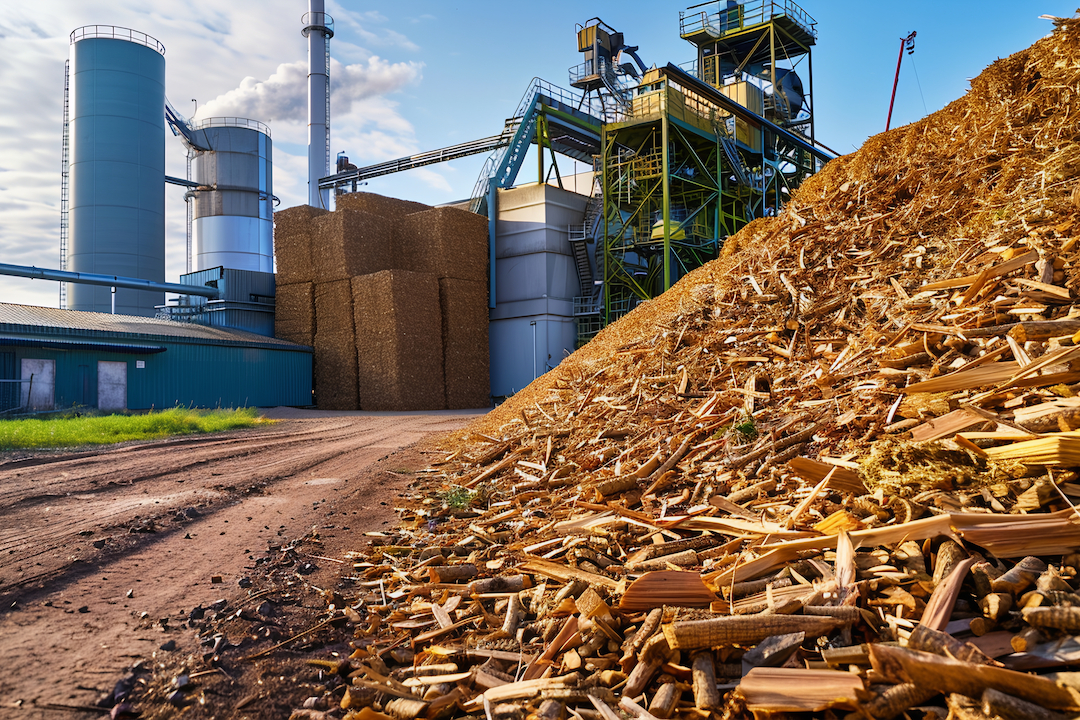
Biomass power is old technology. The plant burns organic fuel, here woody biomass, to boil water. The steam spins a turbine.
The appeal is reliability. Solar fades at night. Wind comes and goes. A biomass plant can keep running in any weather as long as fuel keeps arriving. The trade-off is combustion: smokestack emissions, truck traffic, noise. Environmental groups also dispute how clean biomass really is. Pacolet’s release says the plants qualify as renewable under federal and state standards.
Where the Money Comes From
The release describes two revenue streams.
First, the plants sell their electricity to Georgia Power under long-term power purchase agreements (PPAs). A PPA is a contract in which a buyer agrees to purchase a plant’s output on set terms for years at a time. Contract lengths and prices weren’t disclosed.
Second, they sell renewable energy credits (RECs) on the open market. A REC is a certificate showing that one megawatt-hour of renewable electricity was generated. Companies buy them to back clean-energy claims. Prices move with demand, so this stream is less predictable.
Georgia Power is a subsidiary of Southern Company (NYSE: SO). Back in 2020, a Georgia Power spokesperson told the Georgia Recorder the utility was obligated to buy the output because the facility counts as a “Qualifying Facility” under federal law. That status comes from the Public Utility Regulatory Policies Act of 1978, which requires utilities to buy power from certain small renewable and cogeneration producers.
Manulife also financed Pacolet’s Piedmont deal in 2024, according to the release. Loan terms weren’t disclosed.
The History the Release Skips
These plants arrived with a fight.
In December 2019, Franklin County declared the GRP plant there a public nuisance over noise and emissions during months of testing, Georgia Public Broadcasting reported. GRP installed silencers and said the problem should ease once the plant was fully operating.
The bigger flashpoint was fuel. The plants burned old railroad ties treated with creosote, a wood preservative. GRP president Steve Dailey told WSB-TV that ties made up about 20% of what the two plants burned. Neighbors in both counties organized, and GRP opposed the legislation that followed.
It passed anyway. Georgia enacted House Bill 857 in 2020. The law requires permits for biomass boilers to bar railroad ties treated with creosote or naphthenate compounds for commercial power generation, unless the boiler also serves a co-located forest products plant.
None of this appears in Pacolet’s announcement. It doesn’t have to. But it’s the backdrop a new owner inherits, and it gives CEO William Crawford’s pledges some context. He said Pacolet will run the plants to the same safety, environmental and efficiency standards as the rest of its portfolio, and that it wants them to have a positive impact on their communities.
Why Georgia, Why Now
The deal lands in a changing power market. In July 2025, Georgia regulators approved Georgia Power’s long-range resource plan, which anticipates about 8,500 MW of load growth over six years, much of it tied to data centers. Critics argued those forecasts may prove too high.
At 171 MW, Pacolet’s biomass fleet is small next to that figure. The release doesn’t tie the acquisition to data-center demand at all. That connection is our context, not the company’s claim. Still, the logic of buying existing, already-contracted capacity in a state worried about supply is easy to follow. Whether the price made sense is impossible to judge without the terms.
Company Framing vs. What’s Confirmed
Lance Jordan, co-head and chief investment officer of Pacolet Power & Infrastructure, said running three plants in one state “creates meaningful operational synergies.” The company didn’t quantify them. Jordan also said Pacolet will keep pursuing renewables investments across the U.S. That’s an intention, not an announced deal.
What the release states as fact: full ownership of GRP, 116 MW of capacity, long-term PPAs with Georgia Power, and Manulife as lender. Everything beyond that is the company’s own characterization.
The Bottom Line
Public-market investors can’t own this deal directly. The two listed names involved, Manulife as lender and Southern Company as parent of the power buyer, are large enough that a 116 MW transaction is unlikely to register in their results. Private capital is still buying operating renewable plants in the Southeast, and contracted biomass remains financeable, local controversy included.
Sources
- Pacolet Milliken Expands its Biomass Platform with the Acquisition of Georgia Renewable Power, PRNewswire, October 7, 2026.
- Biomass Plant In Northeast Georgia Draws Complaints From Residents, Georgia Public Broadcasting (Sophia Saliby), January 28, 2020.
- Rural Georgia fury over power plants burning railroad ties spurs legislation, Georgia Recorder, February 12, 2020.
- Neighbors say plant that’s supposed to be renewable energy source is making them sick, WSB-TV Channel 2 Action News.
- House Bill 857 (2020 Signed Legislation), Office of the Governor of Georgia.
- Utility Dive coverage of the Georgia Power 2025 IRP approval, Utility Dive, July 2025.
- GRP Franklin Renewable Energy power station, Global Energy Monitor, Global Bioenergy Power Tracker.
- The Twin Biomass Sisters of Franklin and Madison Counties, Biodiesel Magazine (trade publication).
Editorial Disclosure
This article is based on a press release issued by Pacolet Milliken, LLC on October 7, 2026, distributed via PRNewswire. Pacolet Milliken and Georgia Renewable Power are privately held and have no publicly traded securities. Securities referenced for context: Manulife Financial Corporation (NYSE: MFC; TSX: MFC) and Southern Company (NYSE: SO). Next Gen Tech Stocks has not received compensation from Pacolet Milliken, Georgia Renewable Power, Manulife, Southern Company, their management, investor relations representatives, or any third party for this coverage. No staff member or principal of Next Gen Tech Stocks holds a position in these securities at the time of publication. Statements regarding future acquisitions, operational synergies, and the plants’ future performance are forward-looking and involve risks and uncertainties; actual results may differ materially. References to these companies are for market context and analytical purposes only and do not constitute an investment recommendation. All securities carry investment risk including possible loss of capital.
Coverage on Next Gen Tech Stocks is for informational and educational purposes only and does not constitute professional financial advice. For further details on our publishing standards, advertising relationships, and risk disclaimers, please see our full Terms & Disclaimers Page