
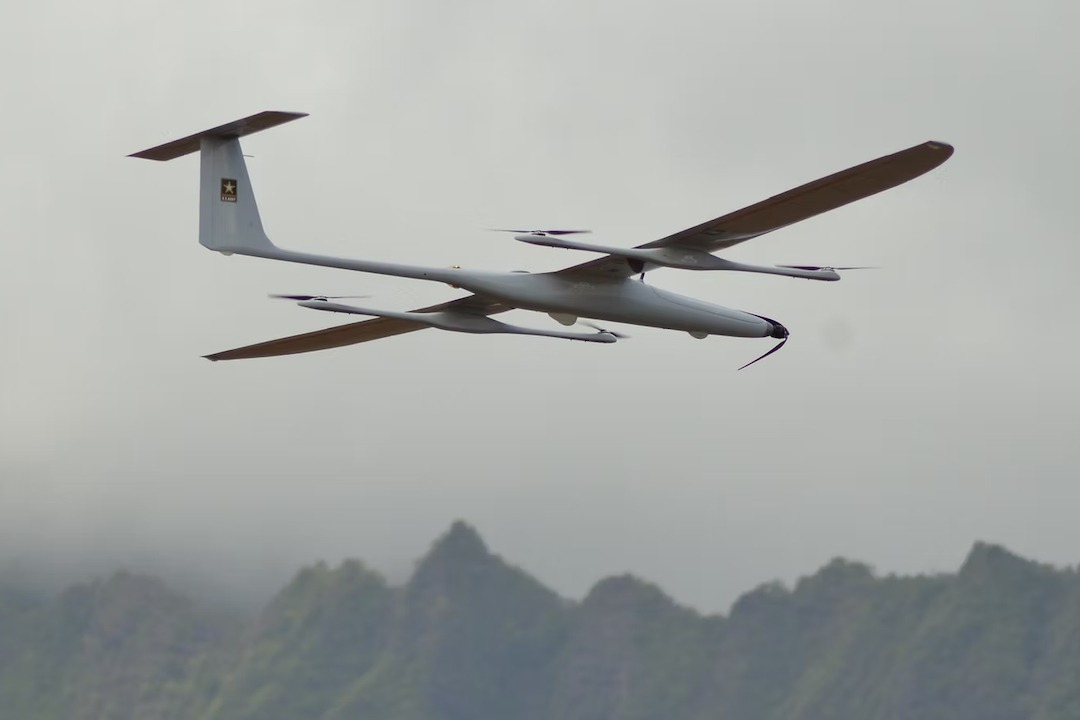
Kraus Hamdani Aerospace (KHA), a privately held drone maker, said in a press release on October 6 that its K1000ULE aircraft is now award-ready on the Army Applications Laboratory’s DevX Autonomy marketplace. That is a procurement status, not a purchase. It means federal agencies with a matching requirement and the funding to back it can pursue the drone without starting a new competitive solicitation, subject to their own contracting review. The release names no buyer, no order and no dollar value.
So why does it matter? Speed. Military buying is famously slow, and the stretch between a successful demo and a signed contract has its own nickname in defense circles: the valley of death. DevX Autonomy is one of the Army’s attempts to shorten it. KHA’s listing is a small, concrete test of whether that works.
How a Six-Minute Video Replaces a Proposal
In a typical competitive buy, the government issues a solicitation, vendors answer with written proposals, and evaluators compare them. DevX Autonomy runs the competition up front.
According to the lab’s program page, vendors submit a six-minute pitch video in place of a written proposal. Subject-matter experts score it against published criteria. Pass, and the solution lands in a repository that buyers across the government can browse, with awards possible under existing contracting authorities. Fail, and the vendor gets feedback and can try again.
The release hedges the key legal point, and that hedge belongs here too. KHA said the direct-to-award pathway may allow agencies to proceed without a new competitive solicitation under the Federal Acquisition Regulation (FAR), the rulebook that governs most federal purchasing. Each agency’s contracting office still has the final say.
Access isn’t limited to the Army. KHA said the Air Force, Navy, Coast Guard and Department of Homeland Security can request accounts and pursue an award against the same K1000ULE listing. Government users need a .mil or .gov email address to get in. Once inside, they can search for KHA and watch its six-minute solution video.
What the K1000ULE Actually Is
The Pentagon sorts drones into five groups by weight, altitude and speed. Group 2, per the classification drawn from the U.S. Army’s UAS roadmap, covers aircraft with a maximum takeoff weight of 21 to 55 pounds that normally fly below 3,500 feet and under 250 knots. Small enough for a field team to launch. Nowhere near the size of the Reaper-class aircraft most people picture.
Aviation Week puts the K1000ULE at 42.5 pounds. It runs fully on electric power. KHA pitches it for three jobs. The first is intelligence, surveillance and reconnaissance (ISR), which in plain terms means watching an area and reporting back. The second is communications relay. The third is electronic warfare, the work of sensing or disrupting radio signals. The company says an open architecture lets operators swap payloads as missions change.
Then there’s the superlative. KHA calls the K1000ULE the world’s longest-endurance fully electric Group 2 drone. That’s the company’s own description. There is outside reporting nearby, though. In August 2023, Aviation Week reported that the aircraft completed a nonstop, unrefueled flight of more than 75 hours, and that KHA said the flight beat a Group 2 endurance record held by Lockheed Martin. Note who is making the record claim: the company, as relayed by a trade publication.
A Busy Year for a Small Company
The DevX listing follows bigger news. In April, KHA announced a single-source IDIQ contract from U.S. Air Forces Central (AFCENT) worth up to $270 million to speed deployment of the K1000ULE.
IDIQ stands for indefinite-delivery, indefinite-quantity. The government sets a ceiling and places orders as needs come up, so the headline number is a maximum. The April release did not say how much had been ordered against it.
That same release said the drone has been integrated into the Army’s Next Generation Command and Control environment through Anduril’s Lattice software. It also said the K1000ULE is on the Department of War’s Drone Dominance marketplace. Both are company statements.
In September 2025, KHA said the aircraft had been added to the Pentagon’s Blue UAS Cleared and Blue UAS Select lists, which the company describes as government rosters of drones vetted for security and cleared for procurement. For a buyer weighing a direct award, that prior vetting matters. Separately, KHA said in April that it had tested laser-based wireless power beaming to the K1000ULE in flight with partner PowerLight Technologies at Shaw Air Force Base, a demonstration rather than a fielded capability.
Keep the two announcements separate. None of the April contract value is tied to the DevX listing, and the October release doesn’t claim otherwise.
What to Watch
Award-ready opens a door. Somebody still has to walk through it.
The real signal is whether agencies place orders through DevX, and whether those awards show up in public contract announcements. If they do, the listing did its job. If they don’t, it stays a credential on a pitch deck.
Public-market investors have no direct way in. KHA is private, and the release says nothing about changing that. Its progress still offers a read on how fast the Pentagon’s newer buying channels are moving money toward small drone makers, the same pool of contracts that listed defense suppliers compete for.
Sources
- KHA’s K1000ULE Achieves Award-Ready Status Through Army DevX Autonomy Marketplace, PRNewswire, October 6, 2026.
- DevX Autonomy, Army Applications Laboratory.
- Kraus Hamdani Aerospace Awarded $270 million AFCENT Contract to Accelerate Deployment of K1000ULE, PRNewswire, April 9, 2026.
- Kraus Hamdani Aerospace’s K1000ULE Becomes Longest-Endurance UAS on DoD’s Blue UAS Cleared and Blue UAS Select Lists, PRNewswire, September 10, 2025.
- Kraus Hamdani Aerospace Demonstrates Extended-Endurance UAS Flight Using Wireless Power Beaming at Shaw Air Force Base, PRNewswire, April 21, 2026.
- Small UAS Breaks Endurance Record With Three-Day Flight, Aviation Week (Steve Trimble), August 4, 2023.
- U.S. Department of Defense (DoD) UAS Group Classification, Penn State GEOG 892 course materials, citing the U.S. Army Roadmap for UAS 2010-2035.
Editorial Disclosure
This article is based on a press release issued by Kraus Hamdani Aerospace on October 6, 2026, distributed via PRNewswire. Securities discussed: None. Kraus Hamdani Aerospace is a privately held company with no publicly traded shares. Next Gen Tech Stocks has not received compensation from Kraus Hamdani Aerospace, its management, investor relations representatives, or any third party for this coverage. No staff member or principal of Next Gen Tech Stocks holds a financial interest in this company at the time of publication. Award-ready status on the DevX Autonomy marketplace is not a contract award. Statements regarding potential future awards, agency use of the DevX Autonomy pathway, and the K1000ULE’s capabilities and performance are forward-looking and involve risks and uncertainties; actual results may differ materially. References to this company are for market context and analytical purposes only and do not constitute an investment recommendation. All securities carry investment risk including possible loss of capital.
Coverage on Next Gen Tech Stocks is for informational and educational purposes only and does not constitute professional financial advice. For further details on our publishing standards, advertising relationships, and risk disclaimers, please see our full Terms & Disclaimers Page