Five million industrial robots are now working in factories around the world. That’s a record, according to the International Federation of Robotics (IFR). In a press release issued September 30, MES Inc., a privately held sourcing and supply chain firm in Ohio, argued that the next limit on growth won’t be software. It will be metal: the aluminum housings, frames and casings that hold every robot together.
One thing to know up front. MES sells exactly what it says robot makers need, including die casting, extrusions, forgings and precision machining through a global supplier network. This is a vendor describing a problem it gets paid to solve. That doesn’t make the argument wrong. It does make it MES’s view, not an independent finding.
The Numbers Check Out
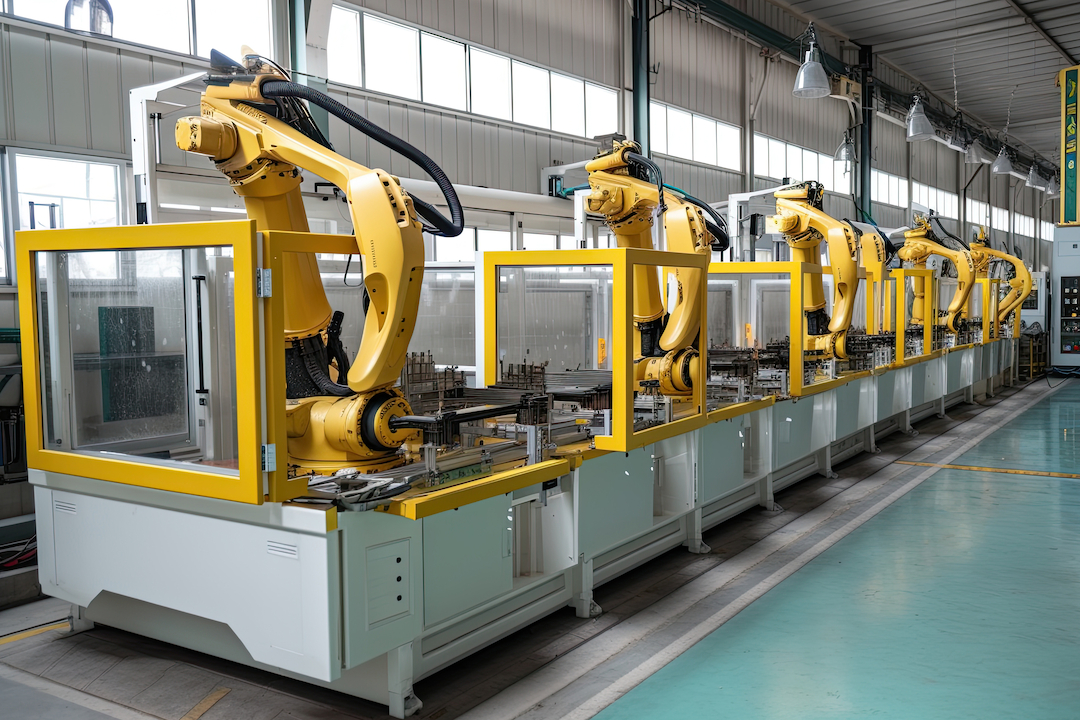
MES built its pitch on the IFR’s World Robotics 2026 report, released September 24. The core figures match the IFR’s own announcement. The global stock of operating industrial robots rose 9% in 2025 to a record 5 million units. Annual installations jumped 11%, with factories adding more than 600,000 new machines. MES cites a precise 603,000; the IFR’s public release gives only the rounded figure.
The IFR expects installations to rise 9% to 655,000 units in 2026 and reach 806,000 by 2029. Those are forecasts. They can miss.
Geography tells its own story. China accounted for 59% of last year’s installations, about 354,000 robots. The United States passed Japan to become the second-largest market, installing almost 38,500 units, up 12%. The IFR expects manufacturing moving into high-wage economies and labor-short countries to keep driving demand.
Why Prototype Parts Don’t Scale
The engineering argument is the useful part of the release.
Early robots are usually built from billet. That’s a solid block of aluminum, cut down on a computer-controlled (CNC) mill until only the finished part remains. It’s precise. It needs no special tooling. It’s also slow and wasteful, which is fine at 50 units and painful at 50,000.
At production volumes, MES says, those same parts shift to one of three processes. Die casting injects molten aluminum into a steel mold. Extrusion pushes heated metal through a shaped opening to make long, uniform profiles. Forging presses metal into shape under heavy force, producing a denser part that handles repeated stress well.
The parts in question include joint and actuator housings, motor housings, frames, battery and electronics enclosures, and gearbox and harmonic drive casings. A harmonic drive is a compact gear set built around a flexible toothed ring, common in robot joints. Most of these parts are aluminum, the company notes, because the metal is strong for its weight, sheds heat well, resists corrosion and machines cleanly.
Here’s the catch. Change the process and you change the part. Wall thickness, load paths and which surfaces need extra machining all shift. Moving from a few hundred units to tens of thousands means “nearly every structural part has to be re-engineered for a new process,” said Hiten Shah, MES’s founder. Teams that plan for it during design keep their launch dates, he added. Teams that wait until tooling is ordered often end up redesigning under schedule pressure.
Five Decisions, One Deadline
MES lists five decisions it says most often determine whether that switch stays on schedule. Match each part’s shape and load to the right process. Finish design-for-manufacturability (DFM) reviews, which check whether a part can actually be produced efficiently, before the design freeze. Qualify casting and forging suppliers before committing to a launch. Build tooling lead times into the schedule. And define machining datums, the reference surfaces every measurement starts from, so cast and machined features stay within tolerance together.
Brad Layne, MES’s engineering manager, put the cost in terms of time. Doing that review early takes a few weeks, he said. Doing it after tooling is cut “can cost a full tooling cycle.” Production dies are custom-built, so a redo means waiting on a new set.
Humanoids Are Still a Small Slice
The release names humanoid, mobile and collaborative robots as the categories to watch. Scale matters here. A separate IFR report on service robots, published September 30, counted about 7,000 full-size humanoids sold worldwide in 2025. Next to more than 600,000 industrial installations, that’s tiny.
The IFR was blunt about why. Most humanoid applications remain specialized and often rely on teleoperation, meaning a human controls the robot remotely. Safety standards, high training and maintenance costs, and the lack of a strong business case in industrial settings still hold adoption back. So the tens-of-thousands scenario Shah describes is current reality for some robot types. For humanoids, it’s still ahead.
What It Means for Investors
MES isn’t publicly traded. There’s no stock here. The read-through is wider. If structural parts really are a scale-up choke point, robot makers that settle manufacturing plans early would have an edge, and so would suppliers with casting and forging capacity. It also suggests that announced humanoid production ramps carry execution risk that has nothing to do with AI.
Context matters, too. This is MES’s second release on the theme in eight days. A September 22 announcement made a similar case using the IFR’s prior-year data. The engineering point is standard manufacturing practice. The urgency is MES’s framing.
Sources
- With a record 5 million industrial robots now operating worldwide, the Ohio-based sourcing and supply chain firm says the castings, extrusions and forgings inside humanoid, mobile and collaborative robots will set the pace for volume production, PRNewswire, September 30, 2026.
- Five Million Robots now Operate in Factories Globally, International Federation of Robotics, September 24, 2026.
- Global Sales of Professional Service Robots Surge 24%, International Federation of Robotics, September 30, 2026.
- MES Inc. Urges Robotics OEMs to Lock In Manufacturing Strategy Before Design Freeze as Global Robot Demand Hits Record Levels, PRNewswire, September 22, 2026.
Editorial Disclosure
This article is based on a press release issued by MES Inc. on September 30, 2026, distributed via PRNewswire. MES Inc. is a privately held company with no publicly traded securities. Next Gen Tech Stocks has not received compensation from MES Inc., its management, investor relations representatives, or any third party for this coverage. No staff member or principal of Next Gen Tech Stocks holds a financial interest in this company at the time of publication. MES provides the manufacturing and sourcing services described in its release, and its view of industry bottlenecks is the company’s own characterization. Statements regarding future robot installations, production volumes, and manufacturing timelines, including International Federation of Robotics forecasts for 2026 and 2029, are forward-looking and subject to risks and uncertainties; actual results may differ materially. References to companies are for market context and analytical purposes only and do not constitute an investment recommendation. All securities carry investment risk including possible loss of capital.
Coverage on Next Gen Tech Stocks is for informational and educational purposes only and does not constitute professional financial advice. For further details on our publishing standards, advertising relationships, and risk disclaimers, please see our full Terms & Disclaimers Page